Love this? Save it for later!
Share the inspiration with your friends
I burned the bottom of this casserole three times before I realized I was treating it like a quick breakfast instead of a make-ahead meal. It wasn’t just a little char; it was a carbonized layer that ruined the entire dish and made me want to throw the whole pan in the trash. I had been rushing, trying to cook it right before guests arrived, ignoring the simple fact that egg bakes need time to set properly. The texture was rubbery, the edges were crispy in the wrong way, and the sausage flavor was lost under the bitterness of burnt cheese.
Honestly, I didn’t even like breakfast casseroles for years. I thought they were just dry, dense bricks of sadness that tasted like leftovers. I preferred my eggs scrambled or in a fluffy omelet, something quick and personal. But then I started hosting weekend brunches for friends who showed up later than expected, and I needed something that could sit in the fridge overnight without falling apart. That was the turning point. I stopped trying to rush it and started planning ahead.
The secret wasn’t in the cooking technique; it was in the timing. When you let the bread soak up the egg mixture overnight, the texture changes completely. It becomes custardy and rich, not dry and crumbly. I learned that the hard way, scraping black bits off the pan while my guests waited. Now, I make this make-ahead sausage and egg breakfast casserole weeks in advance of any gathering. It is the only way I serve breakfast anymore.
There is a quiet satisfaction in pulling a dish from the fridge at 7 AM and knowing it will be perfect by 10 AM. You don’t stand over the stove. You don’t stress about timing multiple components. You just slice it and serve it warm. That reliability is worth the initial failure. It turns a stressful morning into a leisurely one, and that is why I keep coming back to this simple recipe.
Why You’ll Love This Recipe
This recipe works because it respects your time while delivering serious comfort food vibes. I have tested dozens of egg bake variations, and this one strikes the perfect balance between hearty protein and fluffy texture. It is not just another egg casserole; it is a structured meal that holds together when sliced but melts in your mouth.
- Quick & Easy: While it bakes for an hour, the active prep time is minimal. You just layer ingredients in a dish. It is perfect for busy weeknights or lazy Sunday mornings.
- Simple Ingredients: You likely have everything in your kitchen already. Bread, eggs, cheese, sausage, and milk. No fancy grocery trips needed.
- Perfect for Brunch: It is the ultimate crowd-pleaser for weekend gatherings, holiday mornings, or potlucks where you need to feed a crowd without being stuck in the kitchen.
- Make-Ahead Magic: This is the standout feature. You can assemble it the night before and bake it in the morning. It saves so much stress.
- Unbelievably Delicious: The combination of savory sausage and melted cheese with soft, custard-like eggs is next-level comfort food. It tastes like a diner classic but made at home.
What makes this different from other versions is the specific ratio of bread to egg mixture. Most recipes use too much bread, resulting in a dry, doughy casserole. I use a mix of day-old bread cubes and a rich egg custard that soaks in completely. It creates a texture that is neither dry nor soupy. It is the kind of dish that makes you close your eyes after the first bite because it hits all the right notes of salt, fat, and comfort. It is healthier than a heavy diner breakfast but just as satisfying.
What Ingredients You Will Need
This recipe relies on simple, wholesome ingredients to deliver bold flavor and satisfying texture without the fuss. The key is using ingredients that complement each other without needing complex seasoning blends. The sausage provides the salt, the cheese adds richness, and the eggs bind everything together.
- Breakfast Sausage: 1 pound of bulk pork sausage. I recommend Johnsonville for best flavor, as it has a nice fennel spice profile. You can also use turkey sausage for a lighter option.
- Bread: 4 cups of day-old bread, cubed. French bread or sourdough works best because it absorbs moisture without turning to mush immediately. Avoid soft sandwich bread unless you toast it first.
- Eggs: 8 large eggs, room temperature. Room temperature eggs blend more evenly into the custard mixture. Crack them into a large bowl and whisk vigorously.
- Milk: 2 cups of whole milk. Whole milk creates a richer, creamier texture. You can substitute half-and-half for an even richer result, or use oat milk for a dairy-free version.
- Cheese: 2 cups of shredded cheddar cheese. Sharp cheddar stands up well to the strong sausage flavor. Grate your own block for better melting, as pre-shredded cheese often contains anti-caking agents that can make the sauce grainy.
- Butter: 2 tablespoons of unsalted butter, for greasing the baking dish. This ensures a nice golden crust on the bottom and sides.
- Seasonings: 1 teaspoon of black pepper and 1/2 teaspoon of garlic powder. Salt is usually not needed because the sausage and cheese are already salty, but taste the mixture before adding more.
If you are looking to substitute ingredients, you can swap the pork sausage for Italian sausage or even crumbled bacon for a different flavor profile. For a gluten-free option, use gluten-free bread cubes and ensure your sausage is certified gluten-free. In the summer, you might add fresh diced tomatoes or spinach, but for this specific make-ahead sausage and egg breakfast casserole, keeping it simple yields the best results.
Equipment Needed
You do not need fancy gadgets to make this dish. A standard 9×13 inch baking dish is all you really need. I prefer a glass Pyrex dish because it heats evenly and allows you to see the browning on the bottom. If you only have a metal pan, you might need to cover the top with foil for the first half of baking to prevent over-browning.
- 9×13 Inch Baking Dish: Glass or ceramic is ideal. Avoid dark non-stick pans if you are new to this, as they conduct heat faster and can burn the bottom.
- Large Whisk: For beating the eggs and milk together until smooth. A balloon whisk works best to incorporate air.
- Large Mixing Bowl: To hold the egg mixture before pouring it over the bread.
- Sharp Knife and Cutting Board: For cubing the bread and chopping the sausage if it is in links rather than bulk.
- Measuring Cups and Spoons: For accurate ratios. Egg bakes are sensitive to liquid ratios, so precision helps.
If you don’t have a 9×13 dish, you can use two 8×8 dishes, but you will need to adjust the baking time slightly, likely reducing it by 10-15 minutes. Keep a close eye on them. For maintenance, simply wash your baking dish with warm soapy water after it cools. If there is stuck-on cheese, soak it in warm water for 20 minutes before scrubbing.
Preparation Method

Follow these steps carefully to ensure your casserole turns out perfectly every time. The process is straightforward, but attention to detail makes the difference between a good casserole and a great one.
- Prepare the Sausage: Start by cooking the breakfast sausage in a skillet over medium heat. Break it up with a spoon as it cooks. Cook until it is browned and no longer pink, which takes about 8-10 minutes. Drain any excess grease. If you leave too much grease in the sausage, the casserole can become oily. Set it aside to cool slightly. (Time: 10 minutes)
- Prepare the Bread: Cut your day-old bread into 1-inch cubes. If the bread is very stale, you can toast it in the oven at 350°F for 5 minutes to crisp it up slightly, but this is optional. Spread the cubes evenly in the bottom of your greased 9×13 baking dish. You want a single layer, but it doesn’t need to be perfectly packed. (Time: 5 minutes)
- Make the Egg Mixture: In a large bowl, whisk together the eggs, milk, black pepper, and garlic powder. Whisk vigorously for about 30 seconds to ensure the yolks and whites are fully combined. This step is crucial for a uniform texture. Do not skip this. (Time: 2 minutes)
- Combine Ingredients: Pour the egg mixture evenly over the bread cubes. Use a spatula to gently press down on the bread, ensuring every piece is soaked. Sprinkle the cooked sausage and shredded cheese over the top. You can mix the sausage into the egg liquid first if you prefer, but layering it on top ensures you get a bite of sausage in every slice. (Time: 5 minutes)
- Refrigerate (The Make-Ahead Step): Cover the dish tightly with plastic wrap or aluminum foil. Place it in the refrigerator for at least 4 hours, or ideally overnight. This allows the bread to absorb the liquid, which prevents a watery bottom and ensures the eggs cook evenly. (Time: 4+ hours)
- Bake: Preheat your oven to 350°F (175°C). Remove the dish from the fridge and let it sit on the counter for 20 minutes while the oven heats up. This takes the chill off the dish. Bake for 45-55 minutes. The casserole is done when the center is set and does not jiggle, and the top is golden brown. A knife inserted into the center should come out clean. (Time: 55 minutes)
- Cool and Serve: Let the casserole cool for 10 minutes before slicing. This resting period allows the custard to firm up slightly, making it easier to cut clean slices. Serve warm. (Time: 10 minutes)
If the top browns too quickly before the center is set, cover it loosely with foil for the remaining baking time. This is a common issue in ovens that run hot.
Cooking Tips & Techniques
There are a few professional tricks that can save this dish from being a disaster. First, never use fresh, soft bread. Fresh bread has too much moisture and will turn into a soggy mess. Day-old bread is drier and acts like a sponge, soaking up the egg custard perfectly. If you only have fresh bread, toast it lightly in the oven first.
Another common mistake is under-whisking the eggs. If you don’t whisk the eggs and milk thoroughly, you can end up with streaks of cooked egg white and raw yolk in your casserole. Whisk until the mixture is uniform and slightly frothy. Also, drain your sausage well. Grease separates from the eggs during baking, leaving pools of oil on the surface. Pat the sausage with a paper towel after cooking to remove excess fat.
Timing is everything. If you bake it immediately after assembling, the center might be runny because the cold bread and fridge-cold eggs take longer to heat up. The overnight soak is not just a convenience; it is a technical requirement for even cooking. Letting the dish sit at room temperature for 20 minutes before baking helps it cook more uniformly.
Do not open the oven door frequently while baking. Every time you open the door, the temperature drops, and the eggs can deflate or cook unevenly. Trust the timer. Check it at 45 minutes. If the top is brown and the center is set, it is done. If it looks dry, you may have overbaked it slightly, but it will still be edible.
Variations & Adaptations
This recipe is very forgiving and can be adapted to suit different tastes or dietary needs. Here are a few variations I have tried with success.
- Veggie Loaded: Add diced bell peppers, onions, or spinach to the sausage layer. Sauté the vegetables first to remove excess water, then mix them in. This adds color and nutrients without making the casserole soggy.
- Bacon and Cheese: Swap the sausage for crispy bacon bits and add a layer of cream cheese or gruyere cheese. This creates a richer, smokier flavor profile that pairs well with maple syrup.
- Gluten-Free: Use gluten-free bread cubes and check your sausage label to ensure it is gluten-free. Most plain sausages are safe, but some contain fillers. Use cornstarch instead of flour if thickening is needed, though this recipe doesn’t require it.
- Dairy-Free: Use a dairy-free milk alternative like almond or oat milk, and substitute the cheese with a vegan cheese shreds. Note that vegan cheese may not melt exactly the same way, so place it on top rather than mixing it in.
I once tried using hash browns instead of bread cubes. It worked well, but the cooking time increased by 10 minutes because the potatoes are denser. If you make this variation, keep a close eye on the baking time. You can also add hot sauce or jalapeños for a spicy kick, which pairs nicely with the rich eggs.
Serving & Storage Suggestions
Serve this casserole warm, straight from the oven or reheated. It pairs beautifully with a side of fresh fruit, like sliced strawberries or melon, to balance the richness. A simple green salad with a vinaigrette dressing also cuts through the heaviness of the eggs and cheese. For beverages, coffee or orange juice is a classic choice.
To store leftovers, let the casserole cool completely, then cover it tightly with plastic wrap or transfer slices to an airtight container. It will keep in the refrigerator for up to 4 days. The flavors actually meld together nicely over the first two days, making it even more flavorful.
For freezing, you can freeze individual slices or the whole casserole (unbaked). If freezing unbaked, wrap the dish tightly in plastic and foil. It can be frozen for up to 3 months. To bake from frozen, add 20-30 minutes to the baking time and keep it covered with foil for the first half. To reheat leftovers, microwave a slice for 1-2 minutes or warm it in the oven at 350°F for 15 minutes. The texture remains soft and custardy when reheated properly.
Nutritional Information & Benefits
This casserole is a balanced meal providing protein, fats, and carbohydrates. Each serving (1/8 of the casserole) contains approximately 350 calories, 20g of protein, 25g of fat, and 15g of carbohydrates. The eggs provide high-quality protein and essential vitamins like B12 and D. The cheese adds calcium and flavor.
It is not inherently low-carb, but you can reduce the carb count by using low-carb bread or almond flour crackers. It is gluten-free if you use certified gluten-free ingredients. The dish is also nut-free, making it safe for most allergy concerns. Personally, I appreciate that this recipe allows me to enjoy a hearty breakfast without feeling sluggish afterward, thanks to the balance of protein and fats. It is a satisfying start to the day.
Conclusion
This make-ahead sausage and egg breakfast casserole is a game-changer for anyone who loves brunch but hates the stress of cooking it all from scratch. It is reliable, delicious, and incredibly easy to prepare. I love that I can spend my morning sleeping in or spending time with my guests instead of standing over a stove.
I encourage you to try this recipe and customize it with your favorite ingredients. Maybe you like more cheese, or perhaps you prefer turkey sausage. Make it your own. I would love to hear how it turns out for you. Please leave a comment below with your variations or questions. Share your photos on social media and tag me so I can see your creations.
Enjoy this cozy, comforting dish. It is the perfect way to start a special morning.
FAQs
Can I make this casserole the night before?
Yes, that is the best way to make it. Assemble everything, cover it, and refrigerate overnight. This allows the bread to soak up the eggs fully, resulting in a better texture.
How do I know when the casserole is done?
The center should be set and not jiggly when you shake the pan. A knife inserted into the middle should come out clean. The top should be golden brown.
Can I use fresh bread instead of day-old?
It is not recommended because fresh bread is too moist and can make the casserole soggy. If you must use fresh bread, toast the cubes lightly in the oven first to dry them out.
How do I reheat leftovers?
You can reheat individual slices in the microwave for 1-2 minutes. For the whole casserole, cover it with foil and bake at 350°F for 15-20 minutes until warmed through.
Can I freeze this casserole?
Yes, you can freeze it unbaked. Wrap it tightly in plastic and foil. Bake it from frozen, adding extra time to the cooking process. You can also freeze baked slices for a quick breakfast later.
Pin This Recipe!
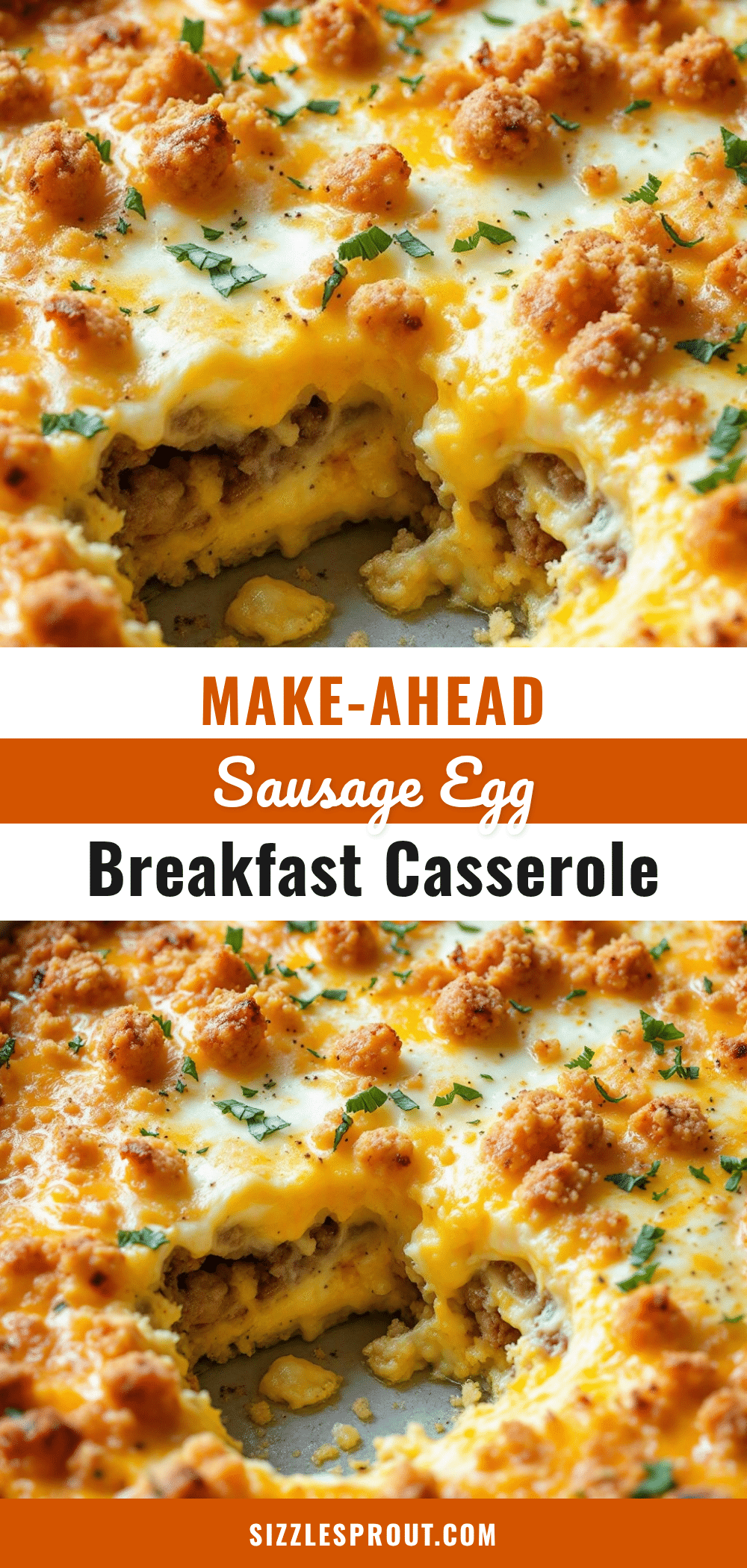
Make-Ahead Sausage and Egg Breakfast Casserole

A reliable, make-ahead breakfast casserole featuring savory sausage, rich egg custard, and melted cheese on day-old bread. Perfect for brunches and weekend gatherings.
- Prep Time: 20 minutes
- Cook Time: 55 minutes
- Total Time: 75 minutes
- Yield: 8 servings 1x
- Category: Breakfast
- Cuisine: American
Ingredients
- 1 pound bulk breakfast sausage (pork or turkey)
- 4 cups day-old bread, cubed (French or sourdough)
- 8 large eggs, room temperature
- 2 cups whole milk
- 2 cups shredded cheddar cheese
- 2 tablespoons unsalted butter (for greasing)
- 1 teaspoon black pepper
- 1/2 teaspoon garlic powder
Instructions
- Cook the breakfast sausage in a skillet over medium heat until browned and no longer pink (8-10 minutes). Drain excess grease and set aside to cool.
- Preheat oven to 350°F (175°C). Grease a 9×13 inch baking dish with butter.
- Spread the cubed bread evenly in the bottom of the prepared baking dish.
- In a large bowl, vigorously whisk together the eggs, milk, black pepper, and garlic powder until uniform and slightly frothy.
- Pour the egg mixture evenly over the bread cubes. Use a spatula to gently press down, ensuring every piece is soaked.
- Sprinkle the cooked sausage and shredded cheese over the top.
- Cover the dish tightly with plastic wrap or aluminum foil and refrigerate for at least 4 hours, or ideally overnight.
- Remove the dish from the fridge and let it sit on the counter for 20 minutes while the oven heats up.
- Bake for 45-55 minutes until the center is set, does not jiggle, and the top is golden brown. If the top browns too quickly, cover loosely with foil.
- Let the casserole cool for 10 minutes before slicing and serving warm.
Notes
Use day-old bread to prevent a soggy texture. If using fresh bread, toast it lightly first. Ensure sausage is well-drained to avoid oily pools. Let the dish rest for 10 minutes after baking to allow the custard to firm up.
Nutrition
- Serving Size: 1/8 of the casserole
- Calories: 350
- Sugar: 3
- Sodium: 600
- Fat: 25
- Saturated Fat: 10
- Carbohydrates: 15
- Fiber: 1
- Protein: 20
Keywords: breakfast casserole, make-ahead breakfast, sausage and egg bake, brunch recipe, easy breakfast, egg bake, comfort food