Love this? Save it for later!
Share the inspiration with your friends
My neighbor watched me wrestle with my sourdough starter one chilly Saturday morning and didn’t say anything at first. Then, without much fanfare, she slid a sheet pan across the fence with a warm, golden focaccia resting on it, sprinkled generously with rosemary and flaky salt. It wasn’t offered as a lesson or a challenge — just a quiet, neighborly gesture that felt more like a shared secret than a recipe handed down. I’d been trying to get sourdough bread right for months, fiddling with kneading and timing, but this focaccia changed the game because it was no-knead. Honestly, I forgot to set a timer and ended up chatting with her about the garden while the dough did its magic. Maybe you’ve been there — caught between wanting to make something from scratch and needing it to be simple enough to actually fit into your day.
Since that afternoon, this easy no-knead sourdough focaccia with rosemary and flaky salt has become my go-to for everything from impromptu dinners to picnic baskets. It’s a little crusty, a little chewy, and that hint of herb and salt makes you stop and savor each bite. The beauty lies in its simplicity and how the slow fermentation brings out that tangy depth without demanding hours of hands-on work. I keep coming back to it because it feels like the perfect balance — rustic yet refined, effortless yet rewarding. It’s the kind of recipe that sticks with you, not because it’s complicated, but because it feels like a conversation in bread form.
Why You’ll Love This Recipe
This easy no-knead sourdough focaccia recipe isn’t just another bread — it’s a little slice of comfort that you can pull together without fuss. From my many kitchen trials and some happy accidents, I’ve found this recipe to be reliably satisfying. Here’s why it might just become your new favorite:
- Quick & Easy: Comes together with less than 15 minutes of active prep, then the dough does the rest while you relax or get on with your day.
- Simple Ingredients: Uses pantry staples like flour, water, salt, and your sourdough starter — no fancy extras needed.
- Perfect for Any Occasion: Whether it’s a casual weeknight dinner, a comforting brunch, or a weekend treat, this focaccia fits right in.
- Crowd-Pleaser: Kids, adults, neighbors — everyone loves that crispy crust and soft, airy crumb with the fresh rosemary aroma.
- Unbelievably Delicious: The slow fermentation adds a subtle tang, and the flaky salt on top provides bursts of savory goodness that make each bite memorable.
This isn’t just your regular focaccia. The no-knead method makes it approachable, and the sourdough starter creates a depth of flavor that feels like you’ve been tending to it for days (even if you haven’t). I love how it turns simple ingredients into something soulful and satisfying — the kind of bread that makes you close your eyes after the first bite and smile. If you want to impress guests without breaking a sweat, or just want fresh bread that tastes like it took hours, this recipe is for you.
What Ingredients You Will Need
This recipe uses simple, wholesome ingredients to deliver bold flavor and satisfying texture without the fuss. Most of these are pantry staples, and you can easily find them at your local grocery or farmers market.
- For the Dough:
- All-purpose flour – 3 cups (360g) (I prefer King Arthur for consistent results)
- Active sourdough starter – 1 cup (240g), bubbly and recently fed
- Water – 1 1/4 cups (300ml), lukewarm (about 75°F or 24°C)
- Extra virgin olive oil – 1/4 cup (60ml), plus more for drizzling
- Fine sea salt – 1 1/2 teaspoons
- For the Topping:
- Fresh rosemary – 2 tablespoons, chopped (or whole small sprigs if you like it rustic)
- Flaky sea salt – 1 teaspoon, sprinkled generously on top (Maldon salt works beautifully)
- Extra virgin olive oil – 2 tablespoons, for drizzling over before baking
If you’re short on fresh rosemary, dried works too but fresh really lifts this focaccia. And if you want to experiment, swapping half the all-purpose flour for bread flour can give a slightly chewier texture. For gluten-free options, almond flour isn’t ideal here, but a well-tested gluten-free blend can work — just expect some difference in texture. This recipe’s beauty is how forgiving it is, so feel free to adapt based on what you have on hand.
Equipment Needed
- Large mixing bowl – preferably glass or stainless steel for easy dough monitoring
- Measuring cups and spoons – for accurate ingredient amounts
- Kitchen scale – highly recommended for best results, especially with flour and water
- Sheet pan (9×13 inches or 33x23cm) – a rimmed baking sheet works perfectly
- Parchment paper or silicone baking mat – to prevent sticking and make cleanup easier
- Plastic wrap or a clean kitchen towel – for covering the dough while it rises
- Wooden spoon or dough whisk – to combine ingredients without kneading
If you don’t have a dough whisk, a sturdy wooden spoon or spatula works just fine. I’ve even mixed this dough by hand in a pinch — messy but satisfying. For the sheet pan, I recommend using one with a rim so the dough doesn’t spill over as it rises and bakes. And keep in mind, a kitchen scale really helps with consistency, but if you don’t have one, measuring cups will do as long as you’re gentle with the flour (no packing!).
Preparation Method
- Activate your starter: About 4-6 hours before you want to start, feed your sourdough starter if needed so it’s bubbly and active. You want it at its peak for the best rise. (If you’re new to sourdough, just make sure it’s bubbly and smells pleasantly tangy.)
- Mix the dough: In your large bowl, combine 3 cups (360g) all-purpose flour and 1 1/2 teaspoons fine sea salt. Add 1 cup (240g) active sourdough starter and 1 1/4 cups (300ml) lukewarm water. Stir with a wooden spoon or dough whisk until the mixture is shaggy but fully combined. It’ll be sticky — that’s perfect! Add 1/4 cup (60ml) olive oil and stir until mixed. (This should take about 5 minutes.)
- First rise: Cover the bowl with plastic wrap or a kitchen towel and let it rest at room temperature (around 70°F or 21°C) for 12 to 18 hours. The dough will double in size and develop bubbles. If your kitchen is cooler, aim closer to 18 hours; warmer, closer to 12. (You might forget about it, like I did once, and it still turned out great.)
- Prepare the pan: When ready, generously oil your sheet pan with olive oil. Scrape the dough out gently onto the pan — it’ll be loose and sticky. Use oiled hands to gently spread the dough to the edges without tearing. (Don’t worry if it resists; just let it rest a few minutes and try again.)
- Second rise: Cover the dough loosely with a towel and let it rise for 1 to 2 hours until it puffs up and fills the pan.
- Add dimples and toppings: Use your fingertips to press dimples all over the dough, pushing gently but firmly. Drizzle 2 tablespoons olive oil over the surface, sprinkle 2 tablespoons chopped fresh rosemary, and then finish with a generous pinch of flaky sea salt (about 1 teaspoon).
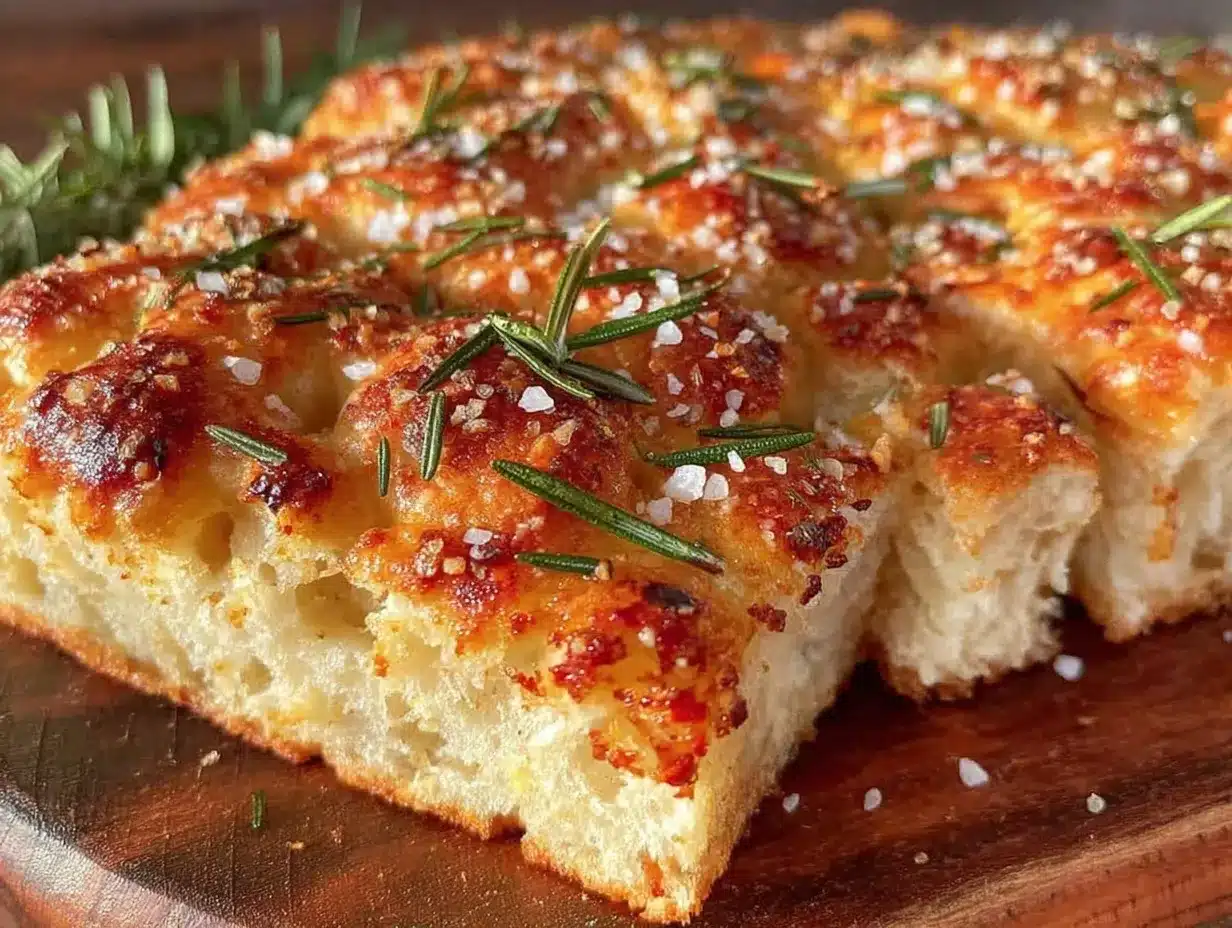
- Bake: Preheat your oven to 450°F (230°C). Place the pan in the oven and bake for 20 to 25 minutes, until golden and crispy on the edges. The top should have a slight sheen from the olive oil and be dotted with browned rosemary bits.
- Cool and serve: Remove from oven and let cool for at least 10 minutes before slicing. This resting time helps the crumb set so it doesn’t squash when you cut into it.
If the crust browns too quickly, tent loosely with foil halfway through baking. And if your dough feels too sticky to handle when transferring to the pan, oil your hands well and resist the urge to add more flour — the oil helps with spreading and keeps the focaccia light.
Cooking Tips & Techniques
One thing I learned the hard way is that patience really pays off here. The long, slow fermentation is what builds that characteristic tang and airy structure, so don’t rush the first rise. You know that feeling when you want bread immediately? Resist it — let the dough work its magic overnight.
Also, don’t skip the olive oil in the dough and on top. It keeps the focaccia moist inside and gives that irresistible golden crust. When you’re making the dimples, press firmly but gently — these pockets hold the oil and toppings and create the classic focaccia texture.
If you’re worried about the rosemary burning, chop it finely or add it halfway through baking. I’ve sometimes had herbs burn when I was distracted by other things, so a quick peek halfway is not a bad idea.
When baking, make sure your oven is fully preheated to 450°F (230°C). A hot oven helps create that crispy crust. Using a heavy sheet pan helps conduct heat evenly. I once tried baking focaccia on a thin cookie sheet and the bottom didn’t crisp well — not the same experience.
Variations & Adaptations
This easy no-knead sourdough focaccia is a great base for many twists. Here are a few ways you can make it your own:
- Cheese Lover’s: Sprinkle shredded mozzarella or parmesan on top with the rosemary before baking. It melts into crispy, gooey patches.
- Seasonal Veggie: Add thin slices of cherry tomatoes, caramelized onions, or roasted garlic cloves nestled into the dimples along with the rosemary.
- Herb Swap: Use thyme, oregano, or sage instead of rosemary for different flavor notes. Fresh herbs always work best, but dried can be sprinkled lightly too.
- Whole Wheat Twist: Substitute half the all-purpose flour with whole wheat flour for a nuttier, earthier focaccia. You might need a bit more water to compensate.
- Gluten-Free: Try a gluten-free flour blend designed for bread baking. Keep in mind the texture will differ, but the no-knead method still works well.
I once made a version with thinly sliced fingerling potatoes and rosemary — it was a hit at a brunch party. The potatoes crisped beautifully, adding a hearty touch. Feel free to experiment and find your favorite combination.
Serving & Storage Suggestions
This sourdough focaccia is best served warm or at room temperature. I like to tear it into rustic chunks and dip it in extra virgin olive oil or a balsamic glaze. It pairs beautifully with soups, salads, or as an accompaniment to a cheese board.
For storage, wrap the focaccia tightly in plastic wrap or place it in an airtight container. It keeps well at room temperature for up to 2 days. For longer storage, freeze slices wrapped individually in foil, then place in a freezer bag for up to 3 months.
To reheat, warm slices in a preheated 375°F (190°C) oven for 5-7 minutes or toast lightly. The crust will crisp back up, and the crumb will soften again. Flavors actually deepen after resting a day, so if you can wait, it’s worth it!
Nutritional Information & Benefits
Per serving (based on 8 servings): approximately 220 calories, 8g fat (mostly from olive oil), 30g carbohydrates, and 5g protein. This focaccia provides a good source of healthy fats from olive oil and some dietary fiber, especially if you use whole wheat flour.
Sourdough fermentation helps break down gluten and enhances nutrient absorption, making this bread easier on digestion compared to conventional yeast breads. Rosemary adds antioxidants and a lovely herbal aroma that can support digestion and immune health.
Keep in mind this recipe contains gluten and is not suitable for those with celiac disease unless adapted with gluten-free flour blends. It’s a wholesome choice for anyone looking to enjoy artisan bread with minimal fuss and quality ingredients.
Conclusion
This easy no-knead sourdough focaccia with rosemary and flaky salt is a wonderful recipe to have under your belt. It’s approachable, forgiving, and delivers that charming balance of crusty exterior and soft, flavorful crumb that you just can’t resist. Whether you’re new to sourdough or a seasoned baker, this recipe offers a no-stress way to enjoy fresh, homemade bread.
I love it because it feels like a little act of kindness — both from my neighbor and from myself when I decide to make it. It’s comforting, simple, and always earns a smile around the table. Try it out, tweak the toppings, and make it yours. And if you give it a shot, I’d love to hear how you adapted it or what your favorite variation is!
Happy baking, and may your kitchen be filled with that warm, irresistible aroma of fresh focaccia soon.
FAQs
Can I make this focaccia without a sourdough starter?
Yes! You can substitute 2 1/4 teaspoons of active dry yeast for the sourdough starter and reduce the rise time to about 1-2 hours. The flavor will be less tangy but still delicious.
How do I know when the focaccia is fully baked?
Look for a golden-brown crust with crispy edges and a hollow sound when you tap the bottom. The internal temperature should be around 200°F (93°C) if you want to be precise.
What if my dough is too sticky to handle?
That’s normal for no-knead dough! Use well-oiled hands to spread it out on the pan. Avoid adding extra flour, as it can make the bread dense.
Can I prepare the dough ahead of time?
Absolutely! After mixing, cover the dough and refrigerate for up to 24 hours. Bring it back to room temperature before the second rise and baking.
What’s the best way to store leftover focaccia?
Wrap it tightly at room temperature for up to 2 days or freeze slices individually wrapped for up to 3 months. Reheat in the oven or toaster for best results.
Pin This Recipe!
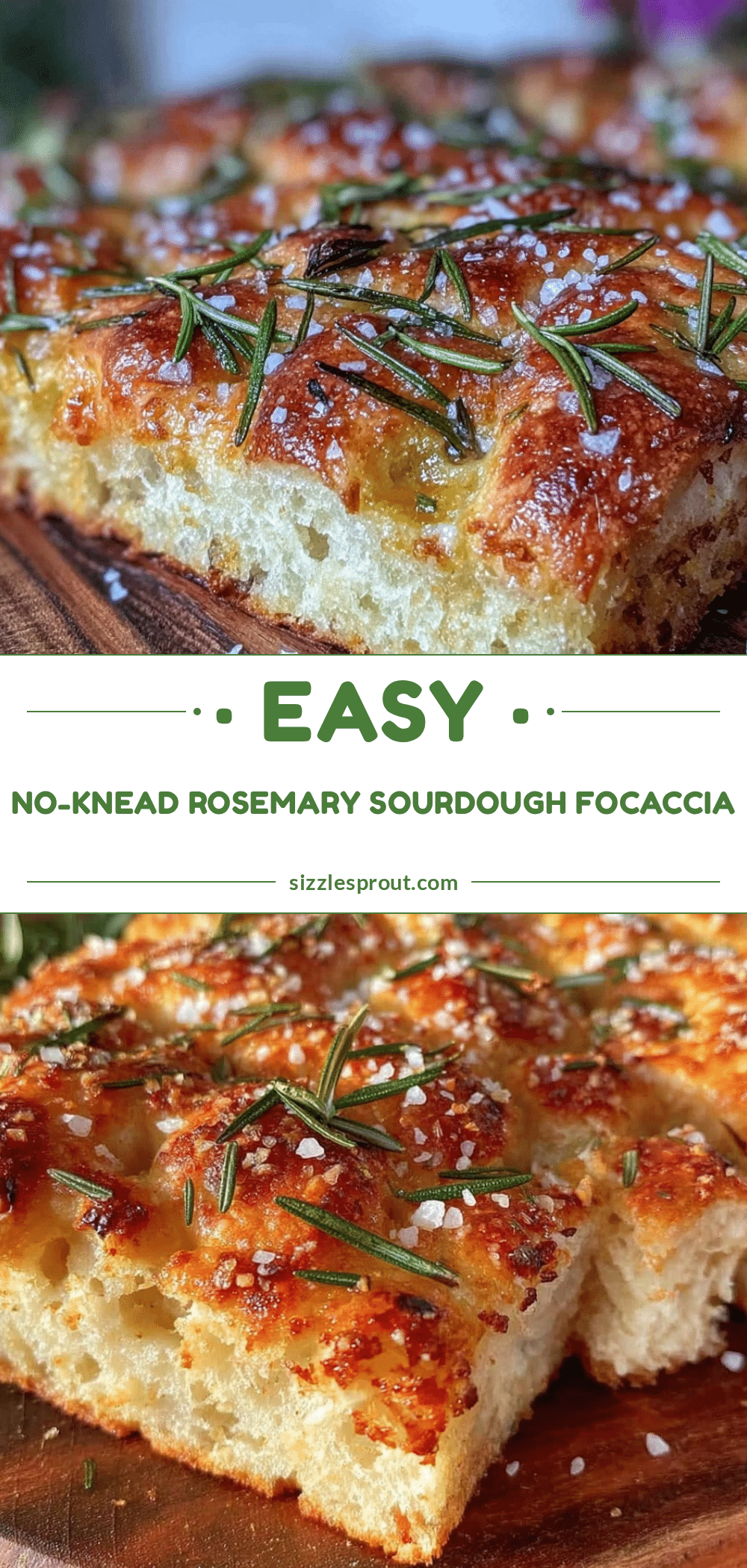
Easy No-Knead Sourdough Focaccia Recipe with Rosemary and Flaky Salt
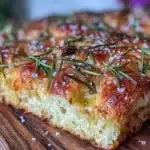
A simple, no-knead sourdough focaccia with rosemary and flaky salt that delivers a crusty exterior and soft, flavorful crumb with minimal hands-on time.
- Prep Time: 15 minutes
- Cook Time: 20-25 minutes
- Total Time: 13 hours 35 minutes to 18 hours 40 minutes
- Yield: 8 servings 1x
- Category: Bread
- Cuisine: Italian
Ingredients
- 3 cups (360g) all-purpose flour
- 1 cup (240g) active sourdough starter, bubbly and recently fed
- 1 1/4 cups (300ml) lukewarm water (about 75°F or 24°C)
- 1/4 cup (60ml) extra virgin olive oil, plus more for drizzling
- 1 1/2 teaspoons fine sea salt
- 2 tablespoons fresh rosemary, chopped (or whole small sprigs)
- 1 teaspoon flaky sea salt (such as Maldon), for sprinkling on top
- 2 tablespoons extra virgin olive oil, for drizzling before baking
Instructions
- Activate your starter: About 4-6 hours before starting, feed your sourdough starter so it’s bubbly and active.
- Mix the dough: In a large bowl, combine flour and fine sea salt. Add sourdough starter and lukewarm water. Stir with a wooden spoon or dough whisk until shaggy and sticky. Add olive oil and stir until mixed, about 5 minutes.
- First rise: Cover the bowl with plastic wrap or a kitchen towel and let rest at room temperature (around 70°F or 21°C) for 12 to 18 hours until doubled in size and bubbly.
- Prepare the pan: Generously oil a 9×13 inch sheet pan. Scrape dough onto the pan and gently spread to edges with oiled hands.
- Second rise: Cover loosely with a towel and let rise 1 to 2 hours until puffy and filling the pan.
- Add dimples and toppings: Press dimples all over dough with fingertips. Drizzle olive oil, sprinkle chopped rosemary, and finish with flaky sea salt.
- Bake: Preheat oven to 450°F (230°C). Bake focaccia for 20 to 25 minutes until golden and crispy on edges.
- Cool and serve: Let cool at least 10 minutes before slicing to allow crumb to set.
Notes
If dough is too sticky to handle, oil your hands well instead of adding flour. For a chewier texture, substitute half the all-purpose flour with bread flour. Fresh rosemary is preferred but dried can be used. Tent with foil if crust browns too quickly. Dough can be refrigerated after mixing for up to 24 hours before second rise.
Nutrition
- Serving Size: 1 slice (1/8 of foca
- Calories: 220
- Fat: 8
- Carbohydrates: 30
- Protein: 5
Keywords: no-knead, sourdough, focaccia, rosemary, flaky salt, easy bread, homemade bread, artisan bread