Love this? Save it for later!
Share the inspiration with your friends
That uneven, jagged edge of toasted bread, darkened to a deep mahogany brown, is what I made this for — everything else is secondary. Honestly, most stuffing recipes fail because they stop halfway through. They give you soft, soggy crumbs that taste like boiled butter. I want the crunch. I want the shatter.
I remember standing over a cast-iron skillet last November, holding my breath as the brown butter hit the stale cornbread cubes. The smell hit me first, nutty and warm, like caramelized hazelnuts. But the sight? That was the promise. Those golden-brown edges glistening with fat, refusing to surrender their structure to moisture. That specific texture, the resistance of a crisp exterior giving way to a tender, herb-scented center, is the whole point.
You know how some dishes just feel like a hug? This isn’t that. This is a handshake. Firm, confident, and memorable. It’s the kind of side dish that steals the show from the turkey, or the pork chops, or whatever main course you’re stressing over. I’ve tested dozens of versions, from the classic white bread approach to fancy sourdough, but there is something about the rustic, craggy texture of cornbread that holds up best.
It’s not about being fancy. It’s about being real. It’s about getting that sage flavor to bloom in the fat before it touches the bread. It’s about ensuring every bite has that contrast. When you take the first spoonful, you shouldn’t just taste herbs; you should hear a tiny crunch. That’s the detail that keeps me coming back to this recipe year after year. It’s simple, but it demands attention.
Why You’ll Love This Recipe
This isn’t just another stuffing recipe you’ll find buried in a holiday cookbook. This version has been stress-tested in my kitchen through more Thanksgiving disasters than I care to admit. I learned the hard way that moisture is the enemy of crunch, and that brown butter is the secret weapon you didn’t know you needed.
Here is why this crispy brown butter sage stuffing with sausage earns a permanent spot on your table:
- Quick & Easy: Yes, it takes some prep to dry out the bread, but the actual cooking is straightforward. You can have this on the table in under an hour if you start with day-old bread.
- Simple Ingredients: You likely have most of this in your pantry. Sage, butter, sausage, and bread. No obscure spices or hard-to-find items. It’s wholesome, honest food.
- Perfect for Fall Dinners: Whether it’s a casual Tuesday roast or a massive holiday feast, the warm, savory flavors fit right in. It pairs beautifully with honey butter skillet cornbread if you want to make the bread yourself.
- Crowd-Pleaser: Kids might complain about the herbs at first, but once they taste that salty sausage and crispy bread, they’ll be digging for the crunchy bits. Adults love the sophistication of brown butter.
- Unbelievably Delicious: The texture is next-level. It’s not mushy. It’s not dry. It’s perfectly balanced between the richness of the meat and the brightness of the sage.
What makes this different? Most people boil their stuffing. They mix wet ingredients and bake it in a dish until it’s soft all the way through. I refuse to do that. By using brown butter and ensuring the bread is truly stale, we create a dish that has depth. The sausage adds a savory punch that plain bread can’t achieve. It’s comfort food, but with a bit of edge. It’s the kind of dish that makes you close your eyes after the first bite because the flavor is just so rich and satisfying. It transforms a simple side into the main event.
What Ingredients You Will Need
This recipe relies on the quality of a few key components. Since the flavor profile is bold, you don’t need fancy ingredients, but you do need the right ones. The goal here is to build layers of flavor: the nuttiness of the butter, the saltiness of the meat, and the earthiness of the herbs.
Here is what you need to gather:
- Stale Cornbread (8-10 cups, cubed): This is the base. Cornbread is better than white bread here because it’s denser and holds its shape. If you use fresh cornbread, it will turn to mush. Let it sit out for 24 hours or bake it extra dry. For a gluten-free option, use a sturdy cornbread recipe.
- Italian Sausage (1 lb): I prefer sweet Italian sausage for this. It has fennel and garlic notes that complement the sage perfectly. You can use hot sausage if you like a kick, but sweet is more crowd-pleasing. Drain the fat if there is too much, but save a little for flavor.
- Unsalted Butter (1 cup / 226g): We need a lot of butter here. Since we are browning it, use high-quality butter. I like to use European-style butter for the higher fat content, which helps with that nutty flavor. Salted butter will work, but you’ll need to reduce the added salt later.
- Fresh Sage Leaves (1/2 cup, chopped): Do not use dried sage if you can help it. Fresh sage has a volatile oil that releases a bright, pine-like aroma when cooked in fat. Dried sage is dusty and muted. Strip the leaves from the stems and chop them roughly.
- Yellow Onion (1 large, diced): Sweetness to balance the savory sausage. Dice it small so it cooks down and disappears into the mix, providing flavor without large chunks.
- Celery (2 stalks, diced): The classic aromatic trio. Celery adds a nice crunch and a slight bitterness that cuts through the richness of the butter and meat.
- Chicken Broth (1-2 cups): Use low-sodium broth so you can control the saltiness. You might not need all of it. The bread absorbs liquid, so add it gradually.
- Large Eggs (2, beaten): These act as a binder. They help hold the stuffing together so it doesn’t crumble apart when you scoop it out.
- Salt and Black Pepper: To taste. Remember, the sausage and broth already have salt, so taste before adding more.
If you can’t find fresh sage, you can substitute with thyme or rosemary, but sage is traditional for a reason. It smells like autumn. Also, if you want to make this ahead, the bread can be cubed and left out overnight to dry out completely. This step is crucial for that crispy texture.
Equipment Needed
You don’t need much, but having the right tools makes the difference between a soggy mess and a crispy masterpiece.
- Large Cast-Iron Skillet: This is my top recommendation. Cast iron retains heat incredibly well, which helps create that crispy, browned crust on the stuffing. If you don’t have one, a large oven-safe skillet works too.
- Baking Dish: If you prefer to bake the stuffing in a dish rather than finish it in the skillet, a 9×13 inch casserole dish is standard. I like to brown it in the skillet first, then transfer it to the dish for the final bake to keep the bottom crispy.
- Large Mixing Bowl: You need plenty of space to toss the bread with the butter and broth. A bowl with a wide rim is easiest to work with.
- Wooden Spoon or Spatula: For stirring the sausage and onions. Metal spoons can scratch non-stick pans, so wood or silicone is safer.
- Measuring Cups and Spoons: Standard baking tools. Accuracy matters less here than in cakes, but having the right amount of sage vs. butter is key.
- Chef’s Knife and Cutting Board: For dicing the onion, celery, and chopping the sage. A sharp knife makes quick work of the vegetables.
If you are cooking for a large crowd, consider using two skillets or a larger baking dish. Also, keep an eye on your skillet handle; cast iron gets hot! If your handle isn’t oven-safe, wrap it in foil before putting it in the oven. This is a safety tip I learned the hard way when I burned my forearm.
Preparation Method
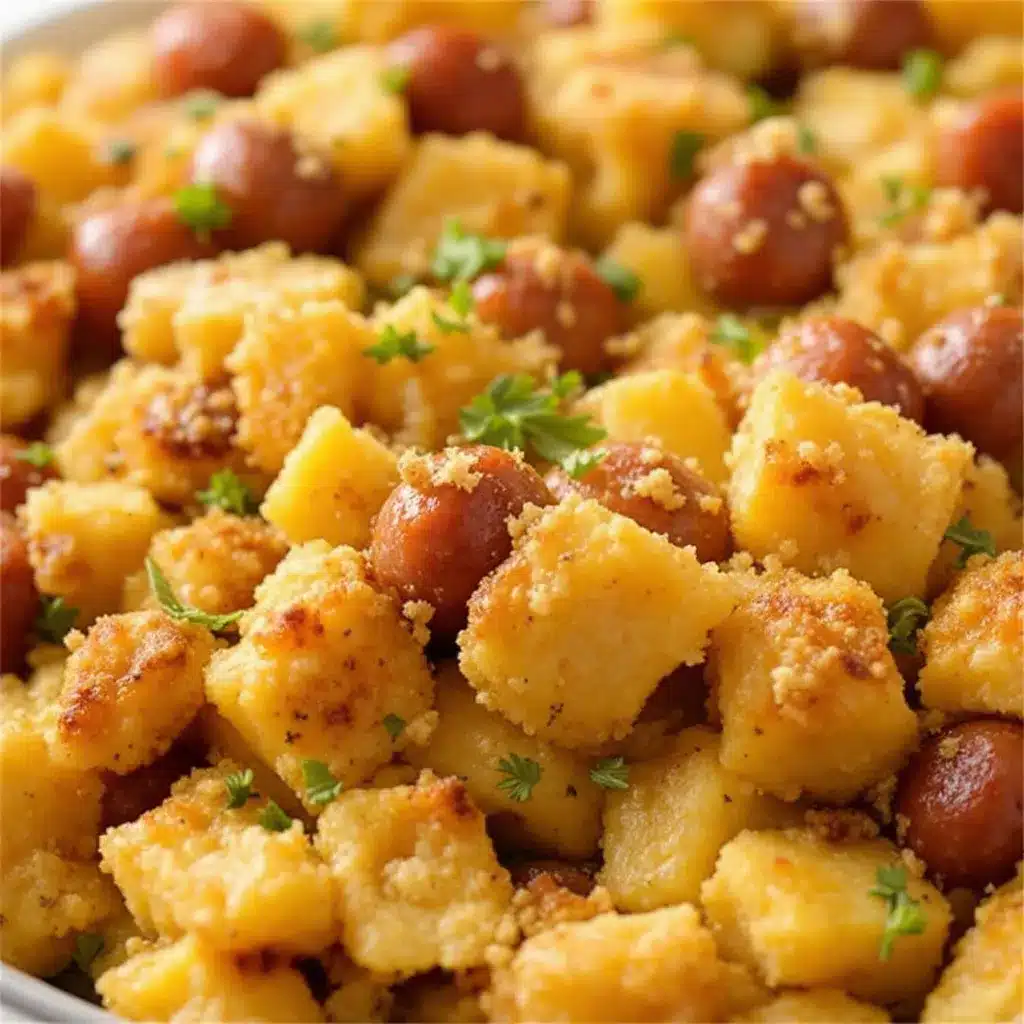
Let’s get into the nitty-gritty. This method is designed to maximize crispiness and flavor. Follow these steps closely.
Step 1: Prep the Bread
Time: 10 minutes + drying time
If you are using store-bought cornbread, let it cool completely. Then, cube it into 1-inch pieces. Spread these cubes out on a large baking sheet. If you have time, let them sit uncovered on the counter for 24 hours. If you’re in a rush, bake them at 300°F (150°C) for 15-20 minutes until they are dry to the touch. They should not feel soft or cool when you touch them. They need to be like sponges waiting for liquid.
Step 2: Cook the Sausage and Vegetables
Time: 15 minutes
Heat a large skillet over medium heat. Add the sausage meat, breaking it up with a wooden spoon as it cooks. Cook until browned and no pink remains, about 8-10 minutes. If there is excessive grease, drain some, but leave about a tablespoon in the pan for flavor. Add the diced onions and celery to the pan. Sauté for 5-7 minutes until the onions are translucent and soft. Stir in the chopped sage at the very end, cooking for just 30 seconds to release its oils. Remove from heat and set aside.
Step 3: Brown the Butter
Time: 5 minutes
In a separate saucepan or directly in your cast-iron skillet (if using), melt the butter over medium heat. Swirl the pan occasionally. The butter will foam, then crackle. Watch it closely. It will turn from yellow to amber, then to a deep golden brown. You will see little brown bits (milk solids) settle at the bottom. The smell will change from buttery to nutty. This takes about 5-7 minutes. Do not walk away. Once it smells like hazelnuts and looks like dark honey, remove it from the heat immediately to stop cooking.
Step 4: Combine the Mixture
Time: 10 minutes
In your large mixing bowl, combine the dried cornbread cubes. Pour the hot brown butter over the bread. Toss gently but thoroughly so every piece gets coated. The bread will start to absorb the butter. Add the sausage and vegetable mixture. Crack the eggs into the bowl and beat them slightly before pouring them in. Add about 1 cup of chicken broth. Toss everything together. The mixture should look moist but not soupy. If it looks dry, add more broth, one splash at a time.
Step 5: Bake Until Crispy
Time: 30-40 minutes
Preheat your oven to 375°F (190°C). If using a cast-iron skillet, transfer the mixture to the skillet. If using a baking dish, grease it lightly with butter. Spread the stuffing evenly. Bake for 20 minutes. Then, turn the broiler on high. Broil for 5-10 minutes, watching closely, until the top is deeply golden and crispy. The edges should pull away slightly from the pan. Let it rest for 10 minutes before serving. This resting time allows the stuffing to set, making it easier to scoop.
Cooking Tips & Techniques
I’ve made this stuffing enough times to know where things can go wrong. Here are some pro tips to ensure success.
- Don’t Skimp on Drying the Bread: This is the most common mistake. If the bread is even slightly soft, your stuffing will be soggy. Dry it out. Use a fan if you’re impatient. The drier the bread, the crispier the result.
- Watch the Butter Color: Brown butter can go from perfect to burnt in seconds. Burnt butter tastes bitter and ruins the dish. If you see smoke, you went too far. Start over. The color should be like dark amber, not black.
- Use Fresh Sage: Dried sage is powdery and lacks aroma. Fresh sage gives that bright, herbal punch that defines this dish. If you can’t find fresh, buy it from a grocery store with a good turnover. It shouldn’t be wilted or slimy.
- Season in Layers: Don’t just salt at the end. Season the sausage, season the onions, and taste the broth. This ensures every component has flavor, not just the top layer.
- Rest Before Serving: I know it’s tempting to dig in immediately, but let the stuffing rest. It helps the structure set. If you cut into it too soon, it might crumble or feel wet.
One personal failure: I once used too much broth and baked it in a deep dish. The center stayed soggy while the top burned. The lesson? Use a shallow dish or skillet. Spread the stuffing out so it’s no more than 2 inches deep. This ensures even cooking and maximum crispiness on all sides.
Variations & Adaptations
While I love this recipe as is, cooking is about flexibility. Here are some ways to adapt it to your needs.
- Dietary Changes: For a vegetarian version, swap the sausage for chopped mushrooms and walnuts. Sauté the mushrooms until they release their water and brown nicely. Use vegetable broth instead of chicken broth. The texture will be slightly different, but the flavor will still be rich and savory.
- Gluten-Free: Use gluten-free cornbread and ensure your sausage and broth are certified gluten-free. Most cornbread is naturally gluten-free, but check the package. The technique remains the same.
- Spice It Up: Add red pepper flakes to the brown butter. Or use hot Italian sausage instead of sweet. This adds a nice kick that pairs well with the sweet cornbread.
- Add Apples: For a touch of sweetness, add diced apples to the onion and celery mix. Apples pair beautifully with sage and sausage. This is a classic combination in many Southern recipes.
- Make Ahead: You can assemble the stuffing the night before. Cover it and refrigerate. When you’re ready to cook, let it sit at room temperature for 30 minutes, then bake as directed. You may need to add a few minutes to the baking time.
I’ve tried adding cranberries to this, and it was surprisingly good. The tartness cuts through the fat. If you have leftover cranberry sauce, chop it up and mix it in. It adds a nice color contrast too.
Serving & Storage Suggestions
This stuffing is best served hot, fresh from the oven. The crispiness fades as it sits, so try to serve it immediately.
- Serving Temperature: Serve it warm. If it cools down, the butter solidifies and the texture changes. If you need to keep it warm, cover it loosely with foil in a 200°F oven.
- Complementary Dishes: This pairs well with roast turkey, pork chops, or even roasted vegetables. It’s also great alongside apple cider braised pork chops for a complete fall meal.
- Storage: Store leftovers in an airtight container in the refrigerator for up to 4 days. The bread will continue to absorb moisture, so it will get softer.
- Reheating: To restore crispiness, reheat in a skillet over medium heat with a little butter. Avoid the microwave if you can help it; it makes the bread soggy. If you must use the microwave, finish it in the toaster oven or air fryer for a few minutes.
- Freezing: You can freeze stuffing, but the texture will change. It will be softer when thawed. It’s still good for soups or casseroles later, but not for serving as a crispy side.
The flavors actually deepen over the first day. Leftovers often taste better on day two, even if the texture is softer. It’s a comforting, hearty meal for lunch the next day.
Nutritional Information & Benefits
This stuffing is rich and indulgent, so portion control is key. It’s not a diet food, but it can fit into a balanced meal.
- Calories: Approximately 350-400 calories per serving, depending on the amount of sausage and butter used.
- Fat: High in fat due to the butter and sausage. Most of this is saturated fat, but the brown butter adds a nutty flavor that makes it feel more decadent.
- Protein: The sausage and eggs provide a good amount of protein, making this a more substantial side dish.
- Carbohydrates: The cornbread is the main source of carbs. If you use gluten-free cornbread, the carb count remains similar.
- Fiber: The cornbread and vegetables provide some fiber, but it’s not a high-fiber dish. Add more vegetables if you want to boost this.
From a wellness perspective, this dish is about satisfaction. It’s meant to be enjoyed in moderation. The sage has anti-inflammatory properties, and the brown butter, while high in calories, is a traditional ingredient that adds depth. It’s a treat, not a staple. Enjoy it as part of a special meal, not every day.
Conclusion
This crispy brown butter sage stuffing with sausage is more than just a side dish. It’s a celebration of texture and flavor. It’s the crunch that makes you smile, the sage that smells like home, and the sausage that makes you come back for seconds. I hope you try it and make it your own.
Feel free to experiment with different herbs or meats. Add some apple, swap the sausage for turkey, or use sourdough bread. The technique is the same, but the results can be uniquely yours. I’d love to hear how it turns out for you.
Please leave a comment below with your thoughts. Did you add extra sage? Did you use hot sausage? Share your variations and tips with the community. And if you make this, tag me on social media! I love seeing your creations.
Thanks for reading. Happy cooking!
FAQs
Can I make this stuffing ahead of time?
Yes, you can assemble the stuffing the night before. Store it in the refrigerator, covered. When you’re ready to bake, let it sit at room temperature for 30 minutes. You may need to add a few minutes to the baking time since it’s starting cold.
What kind of sausage is best for this recipe?
Sweet Italian sausage is the classic choice because it has fennel and garlic notes that pair well with sage. However, you can use hot Italian sausage for more spice, or breakfast sausage for a different flavor profile. Just make sure it’s removed from the casing if you’re using links.
Why is my stuffing soggy?
The most common reason is that the bread wasn’t dry enough. Make sure your cornbread is stale or baked until dry before using it. Also, avoid adding too much broth. Add it gradually and stop when the mixture looks moist but not wet.
Can I use white bread instead of cornbread?
Yes, you can use white bread, but cornbread is preferred for its texture and flavor. If you use white bread, make sure it’s day-old and cubed. You may need slightly less broth since white bread absorbs liquid differently.
How do I store leftover stuffing?
Store leftovers in an airtight container in the refrigerator for up to 4 days. To reheat, use a skillet with a little butter to restore crispiness. Avoid the microwave if you want to keep the texture.
Pin This Recipe!
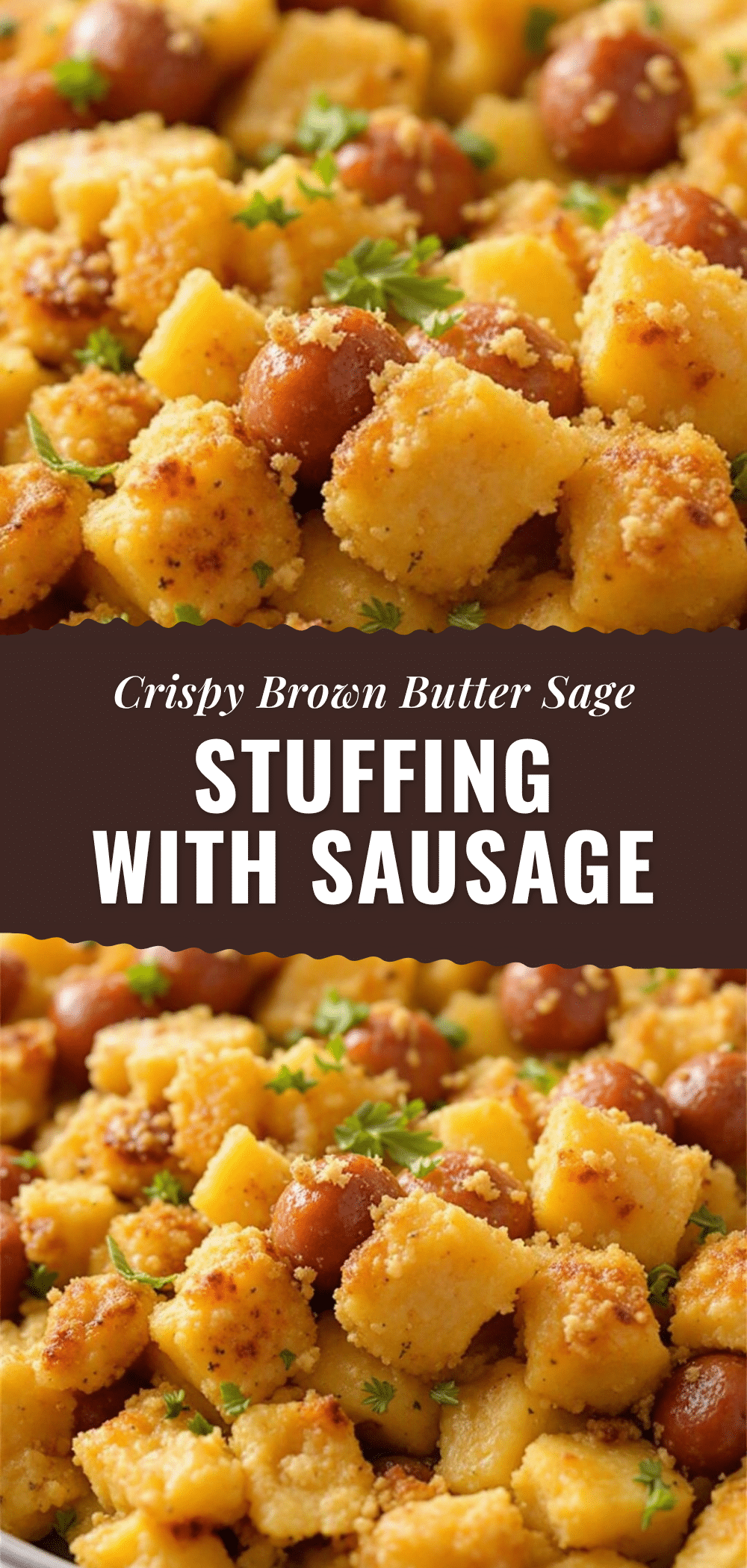
Crispy Brown Butter Sage Stuffing with Sausage

A rustic, crunchy stuffing made with stale cornbread, savory Italian sausage, and nutty brown butter. This recipe prioritizes texture, ensuring a crisp exterior and tender interior for a memorable side dish.
- Prep Time: 10 minutes
- Cook Time: 30-40 minutes
- Total Time: 45 minutes
- Yield: 6-8 servings 1x
- Category: Side Dish
- Cuisine: American
Ingredients
- 8–10 cups stale cornbread, cubed
- 1 lb sweet Italian sausage
- 1 cup (226g) unsalted butter
- 1/2 cup fresh sage leaves, chopped
- 1 large yellow onion, diced
- 2 stalks celery, diced
- 1–2 cups low-sodium chicken broth
- 2 large eggs, beaten
- Salt and black pepper to taste
Instructions
- Prep the bread: Cube the cornbread and spread it on a baking sheet. Let it sit uncovered for 24 hours or bake at 300°F (150°C) for 15-20 minutes until dry to the touch.
- Cook the sausage and vegetables: Heat a large skillet over medium heat. Cook the sausage until browned, then drain excess grease leaving about a tablespoon. Add onions and celery, sautéing for 5-7 minutes until soft. Stir in sage for 30 seconds and remove from heat.
- Brown the butter: Melt butter in a saucepan or skillet over medium heat. Swirl occasionally until it turns deep golden brown and smells nutty (about 5-7 minutes). Remove from heat immediately.
- Combine the mixture: In a large bowl, toss dried cornbread with the hot brown butter. Add the sausage/vegetable mixture, beaten eggs, and 1 cup of chicken broth. Toss until moist but not soupy, adding more broth if needed.
- Bake until crispy: Preheat oven to 375°F (190°C). Transfer mixture to a cast-iron skillet or greased baking dish. Bake for 20 minutes, then broil on high for 5-10 minutes until deeply golden and crispy. Rest for 10 minutes before serving.
Notes
Ensure the cornbread is completely dry to achieve crispiness. Watch the butter closely to prevent burning. Let the stuffing rest for 10 minutes before serving to allow it to set. For leftovers, reheat in a skillet with butter to restore crunch.
Nutrition
- Serving Size: 1 cup
- Calories: 375
- Sugar: 2
- Sodium: 650
- Fat: 28
- Saturated Fat: 14
- Carbohydrates: 22
- Fiber: 2
- Protein: 12
Keywords: stuffing, cornbread stuffing, brown butter, sage, sausage, crispy stuffing, Thanksgiving side dish, fall recipes