Love this? Save it for later!
Share the inspiration with your friends
I was twenty-four, broke, and convinced that cooking was supposed to be a creative performance art. I remember standing over a tiny, scratched stovetop, trying to sear chunks of chuck roast in a pan that was just too small. The oil splattered everywhere, the beef steamed instead of browning, and the whole thing ended up looking like gray mush by the time I added the carrots. It was a disaster, honestly.
But then I found that slow cooker. It was a cheap, beige thing I bought at a garage sale, covered in a sticky label from a previous owner’s garage sale. I dumped everything in there on a Tuesday evening because I was exhausted, didn’t want to stand over the stove, and just wanted something warm waiting for me when I got home from my double shift at the library. I didn’t care about perfection. I just cared about warmth.
When I pulled the lid off hours later, the kitchen smelled like a hug. The beef had fallen apart into tender, savory shreds, and the vegetables had surrendered their flavors into a rich, dark broth. I ate it straight from the pot with a spoon, sitting on the floor because I didn’t have a dining table yet. It wasn’t fancy. It wasn’t Instagram-worthy. But it was the first time I realized that food could actually fix a bad day.
That cozy slow cooker beef and vegetable stew became my anchor. It taught me that you don’t need a perfect kitchen or expensive ingredients to make something soul-soothing. You just need patience and the willingness to let things simmer. Years later, my kitchen is fully equipped, but I still come back to this method. It’s simple, forgiving, and deeply comforting, exactly like that first bowl on the floor.
Why You’ll Love This Recipe
There is a specific kind of magic that happens when you stop trying to control the cooking process and just let the machine do the work. This recipe isn’t just about feeding people; it’s about giving you your evening back. I’ve tested dozens of variations over the years, from adding wine to skipping the sear, and this is the one that consistently hits the spot every single time.
- Set It and Forget It: This comes together in under 15 minutes of active prep. You literally just chop, dump, and go. It’s perfect for those busy weeknights when you’re too tired to think about chopping onions while standing at the sink.
- Pantry Staples: You likely already have everything in your kitchen. No fancy grocery trips needed for obscure spices or hard-to-find cuts of meat. It’s humble, honest cooking.
- Perfect for Cold Evenings: Whether it’s a rainy Tuesday in November or a snowy January night, this stew provides that immediate comfort. It’s the culinary equivalent of a weighted blanket.
- Crowd-Pleaser: I’ve served this to picky eaters, carnivores, and health-conscious friends alike, and everyone cleans their plate. The sweetness of the carrots and the richness of the beef balance out perfectly.
- Unbelievably Delicious: The texture is next-level. Because it cooks slowly, the collagen in the beef breaks down completely, creating a natural thickening effect that makes the broth rich without needing a ton of flour or cornstarch.
What makes this version different is the focus on building layers of flavor before the slow cook even starts. I always sear the meat (even if you skip it, the flavor difference is huge) and deglaze the pot. It’s not just another version; it’s the version that respects your time while delivering maximum comfort. It’s the kind of meal that makes you close your eyes after the first bite, forgetting about the emails piling up on your phone.
What Ingredients You Will Need
This recipe uses simple, wholesome ingredients to deliver bold flavor and satisfying texture without the fuss. The beauty of a slow cooker stew is that the long cooking time allows even the humblest vegetables to transform. You don’t need organic, farm-to-table produce for this to taste amazing, but using the best quality beef you can find will make a noticeable difference in the final richness.
For the Base:
- Beef Chuck Roast: 2 pounds, cut into 1-inch cubes. Look for meat with good marbling. I prefer buying from a local butcher if possible, but a good supermarket brand works fine. Avoid lean cuts like sirloin, as they will turn out dry and tough.
- Beef Broth: 2 cups. Use a low-sodium version so you can control the saltiness yourself. Brands like Swanson or Kitchen Basic are reliable staples.
- Tomato Paste: 2 tablespoons. This adds a deep umami punch and helps thicken the sauce slightly.
- Worcestershire Sauce: 1 tablespoon. A few dashes go a long way in adding savory depth.
For the Vegetables:
- Carrots: 4 large, peeled and chopped into 1-inch chunks. Larger pieces hold up better in the slow cooker than thin slices.
- Potatoes: 1.5 pounds, Yukon Gold or russet, peeled and cubed. Yukon Golds are my pick because they stay creamy and don’t fall apart as easily as russets.
- Onion: 1 large yellow onion, diced. This forms the aromatic base of the stew.
- Garlic: 4 cloves, minced. Don’t skimp on the garlic; it’s the backbone of the flavor profile.
- Celery: 2 stalks, sliced. Adds a nice crunch and herbal note.
For the Seasoning:
- Dried Thyme: 1 teaspoon. Fresh thyme can be used, but dried holds up better to long cooking times.
- Dried Rosemary: 1/2 teaspoon, crushed. Adds a piney, earthy aroma.
- Bay Leaves: 2 leaves. Essential for that classic stew smell.
- Salt and Black Pepper: To taste. Season generously, but remember you can always add more at the end.
- Tomato Sauce: 1 can (8 oz). Adds body and a touch of acidity to balance the richness.
If you want to get fancy, you can swap the beef broth for red wine, but the vegetable version is just as satisfying. For a gluten-free option, just ensure your broth and Worcestershire sauce are certified gluten-free, as some brands use barley or wheat.
Equipment Needed
You don’t need much to pull this off, which is half the appeal. A 6-quart slow cooker is the standard size and works perfectly for this amount of ingredients. If you have a smaller 4-quart model, you might need to reduce the recipe by half, or if you have a larger 8-quart, you can easily double it for meal prep.
I recommend using a large Dutch oven or skillet for searing the beef if you choose to do that step. It’s not strictly necessary, but it adds a layer of flavor that boiling meat never will. A simple sharp chef’s knife and a cutting board are your only other must-haves. I also suggest having a wooden spoon handy for stirring, as metal spoons can scratch the ceramic insert of some slow cookers.
If your slow cooker doesn’t have a glass lid, make sure you get one that fits tightly. Trapped steam is crucial for cooking the vegetables evenly. For budget-friendly options, any basic programmable slow cooker from a department store will do the job. Just avoid the very cheap, thin plastic ones that don’t heat evenly. A sturdy, heavy-bottomed pot is better than a flimsy one every time.
Preparation Method
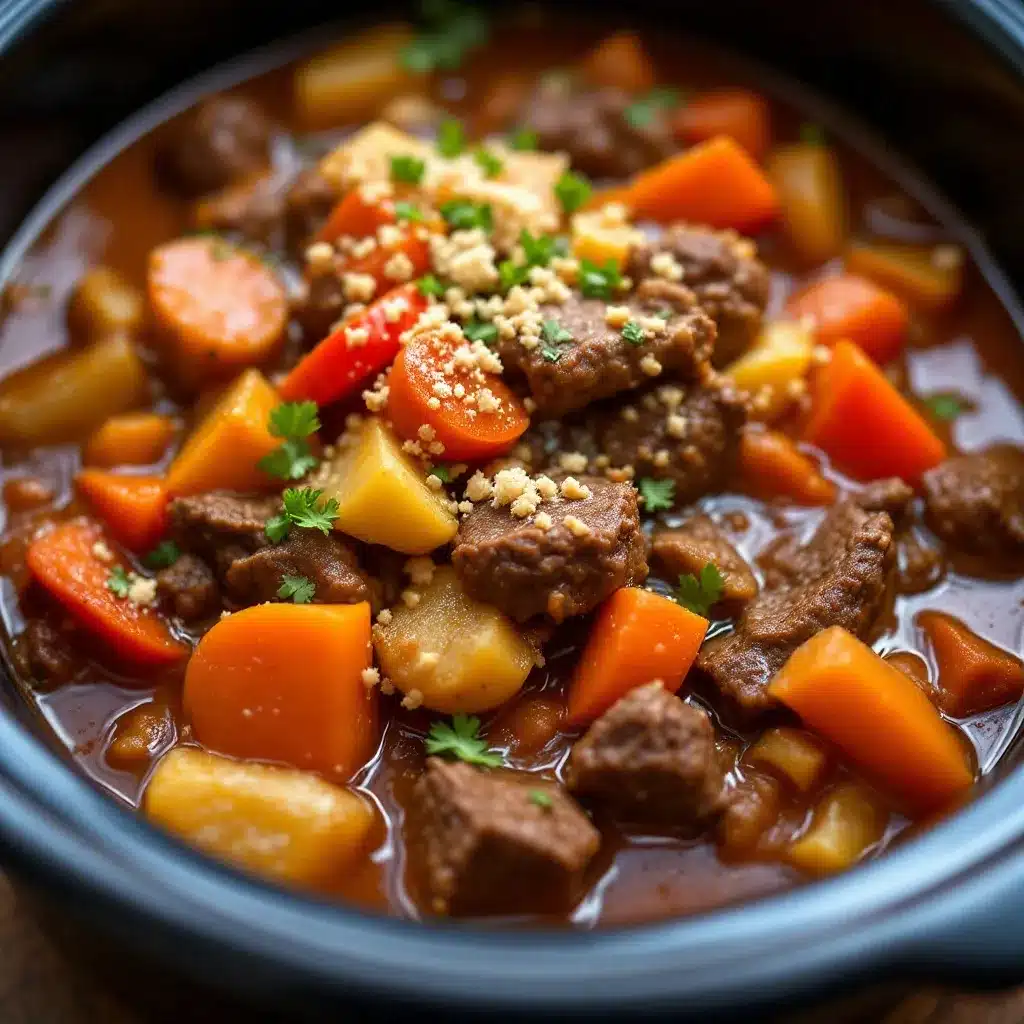
Getting this stew started is incredibly straightforward, but paying attention to the details makes all the difference in the final texture. Here is how to put it together for the best results.
- Prep the Beef: Pat the beef cubes dry with paper towels. This seems like a minor step, but removing surface moisture is critical for getting a good sear. If the meat is wet, it will steam instead of brown. Season the beef generously with salt and pepper.
- Sear the Meat: Heat a tablespoon of oil in a large skillet over medium-high heat. Working in batches to avoid crowding the pan, sear the beef on all sides until browned. This should take about 3-4 minutes per batch. Don’t rush this step; the Maillard reaction here builds the foundation of the stew’s flavor. Transfer the browned beef to your slow cooker insert.
- Sauté the Aromatics: In the same skillet, add the diced onions and celery. Cook for about 3-4 minutes until they start to soften. Add the minced garlic and cook for just 30 seconds until fragrant. Be careful not to burn the garlic, or it will turn bitter.
- Deglaze the Pan: Pour in a splash of the beef broth or wine to scrape up the browned bits (fond) from the bottom of the skillet. These bits are pure flavor. Pour this liquid mixture over the beef in the slow cooker.
- Add Vegetables and Liquids: Add the chopped carrots and potatoes to the slow cooker. Stir in the tomato paste, tomato sauce, Worcestershire sauce, dried thyme, rosemary, and bay leaves. Pour in the remaining beef broth. Stir everything gently to combine.
- Cook: Cover the slow cooker with the lid. Cook on HIGH for 4-5 hours or LOW for 7-8 hours. The stew is done when the beef is fork-tender and the potatoes are cooked through. Avoid lifting the lid frequently, as this releases heat and extends cooking time.
- Finish: Remove the bay leaves. Taste the stew and adjust seasoning with more salt or pepper if needed. If the broth is too thin for your liking, you can mix 1 tablespoon of cornstarch with 1 tablespoon of cold water and stir it in during the last 30 minutes of cooking.
Cooking Tips & Techniques
I’ve made enough stew to know that small tweaks can save a meal. One common mistake is cutting the vegetables too small. In a slow cooker, small pieces of potato and carrot can disintegrate into mush. Keeping them in 1-inch chunks ensures they hold their shape and provide a satisfying bite.
Another tip is to add delicate greens, like spinach or kale, at the very end. If you add them at the beginning, they will turn into dark, slimy leaves. Stirring in a couple of handfuls of fresh spinach during the last 15 minutes of cooking adds color and nutrition without ruining the texture.
Talking about timing, the LOW setting is almost always better for beef stew. The gentle heat allows the connective tissues in the chuck roast to break down slowly, resulting in meat that falls apart. HIGH heat can sometimes leave the outside of the meat tough while the inside is still chewy. If you’re short on time, HIGH works, but LOW is where the magic happens.
Don’t skip the searing step if you have the time. It adds a depth of flavor that you just can’t get by dumping raw meat into the pot. However, if you are truly rushed, you can skip it. It’s still delicious, just less complex. Also, remember that slow cookers vary. Some run hot, some run cool. Check your stew about an hour before the timer goes off to ensure the vegetables aren’t overcooking.
Variations & Adaptations
One of the best things about this base recipe is how easily it adapts to what you have on hand. Here are a few ways I like to change it up:
- Root Vegetable Boost: Swap half the potatoes for parsnips or turnips. These root vegetables have a slight peppery sweetness that pairs beautifully with the beef and thyme.
- Spicy Kick: Add a pinch of cayenne pepper or a diced jalapeño along with the onions. It adds a subtle heat that warms you up from the inside out, perfect for cold winter nights.
- Herb Garden Twist: If you have fresh herbs growing, swap the dried thyme and rosemary for a generous handful of fresh sprigs. Add them in the last hour of cooking to preserve their bright flavor.
- Gluten-Free: This recipe is naturally gluten-free as long as you use a certified gluten-free broth and Worcestershire sauce. It’s a safe and hearty option for those with sensitivities.
- Personal Favorite: I sometimes add a splash of red wine when I deglaze the pan. It adds a richness that feels a bit more upscale, though the wine isn’t strictly necessary.
For a vegetarian version, you can substitute the beef with hearty mushrooms like cremini or portobello, and use vegetable broth. The texture won’t be the same, but the flavor profile remains comforting and satisfying.
Serving & Storage Suggestions
This stew tastes even better the next day, as the flavors have more time to meld together. Serve it hot in deep bowls, perhaps topped with a sprinkle of fresh parsley or a dollop of sour cream for richness. It pairs wonderfully with crusty bread for dipping, or a side of honey butter skillet cornbread for a complete meal.
For storage, let the stew cool completely before transferring it to an airtight container. It will keep in the refrigerator for up to 4 days. To freeze, place portions in freezer-safe bags or containers. It freezes beautifully for up to 3 months. Thaw it overnight in the fridge before reheating.
When reheating, add a splash of water or broth if it looks too thick, as the potatoes will continue to absorb liquid. Microwave it in intervals, stirring in between, or warm it gently on the stovetop over low heat. Avoid boiling it vigorously, or the vegetables might break down further.
Nutritional Information & Benefits
This stew is a nutrient-dense meal that provides a good balance of protein, fiber, and vitamins. The beef is an excellent source of iron and B vitamins, which are great for energy levels. The carrots and potatoes provide beta-carotene and potassium, supporting heart and eye health.
It’s naturally gluten-free and can be made low-carb by omitting the potatoes or reducing the portion size. The broth is relatively low in calories, making it a filling yet light option for dinner. I love that it’s a one-pot meal, which means less washing up and more time relaxing. It’s comfort food that actually supports your wellness goals without feeling like a sacrifice.
Conclusion
There is something deeply satisfying about coming home to a house that smells like a slow-cooked stew. This cozy slow cooker beef and vegetable stew is more than just dinner; it’s a way to slow down and take care of yourself. It’s simple, forgiving, and incredibly delicious.
I encourage you to make it your own. Add whatever vegetables you have lying around, swap the herbs for what you like, and don’t worry about perfection. The best meals are the ones made with love and a little bit of improvisation. If you try this recipe, I’d love to hear how it turned out. Leave a comment below with your favorite variation or just tell me how much your family loved it.
Happy cooking, and may your evenings be cozy and your bowls be full.
FAQs
Can I use frozen beef for this recipe?
It’s best to use fresh, thawed beef for searing. If you must use frozen, you can skip the searing step and add the frozen chunks directly to the slow cooker, but the cooking time may increase slightly, and the texture might be less tender.
How do I thicken the stew if it’s too runny?
You can make a slurry by mixing 1 tablespoon of cornstarch with 1 tablespoon of cold water. Stir this into the stew during the last 30 minutes of cooking. Alternatively, you can remove some of the liquid, mix it with cornstarch separately, and stir it back in.
Can I make this in an Instant Pot?
Yes! Use the Sauté function to brown the beef and onions, then add all ingredients and cook on High Pressure for 20 minutes, followed by a natural release. The result will be very similar, just faster.
What cuts of beef work best?
Chuck roast is the best choice because it has enough fat and connective tissue to stay tender during long cooking. Sirloin or round roast can work but may be leaner and slightly tougher.
Can I double this recipe?
Yes, you can double the recipe, but make sure your slow cooker is large enough (at least 7-quarts). You may need to increase the cooking time slightly to ensure everything is heated through and tender.
Pin This Recipe!
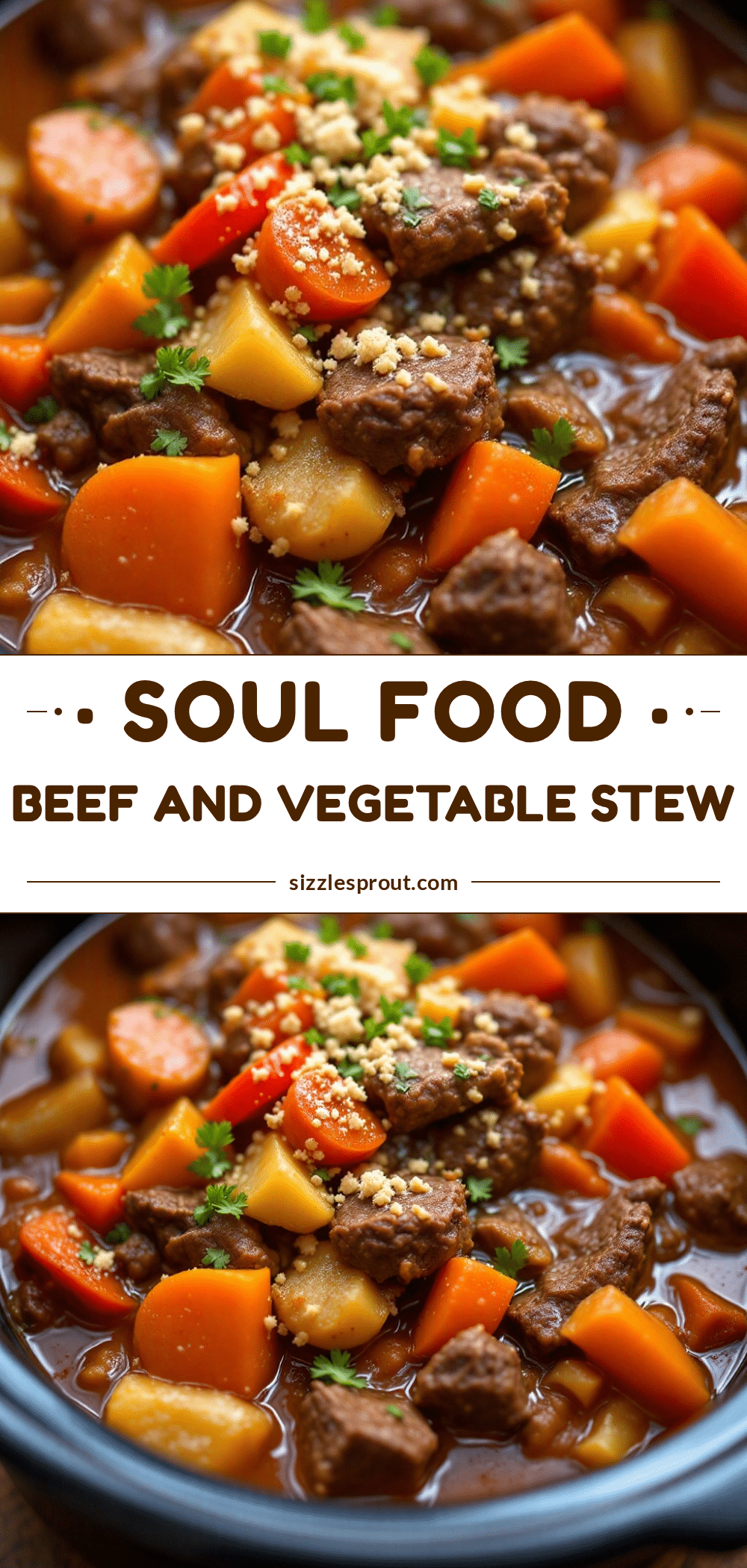
Cozy Slow Cooker Beef and Vegetable Stew
A simple, forgiving, and deeply comforting slow cooker stew made with tender chuck roast and hearty vegetables. This set-it-and-forget-it meal delivers rich flavor and soul-soothing warmth with minimal active prep time.
- Prep Time: 15 minutes
- Cook Time: 7-8 hours
- Total Time: 7 hours 23 minutes
- Yield: 6 servings 1x
- Category: Main Course
- Cuisine: American
Ingredients
- 2 pounds beef chuck roast, cut into 1-inch cubes
- 2 cups beef broth (low-sodium)
- 2 tablespoons tomato paste
- 1 tablespoon Worcestershire sauce
- 4 large carrots, peeled and chopped into 1-inch chunks
- 1.5 pounds potatoes (Yukon Gold or russet), peeled and cubed
- 1 large yellow onion, diced
- 4 cloves garlic, minced
- 2 stalks celery, sliced
- 1 teaspoon dried thyme
- 1/2 teaspoon dried rosemary, crushed
- 2 bay leaves
- Salt and black pepper, to taste
- 1 can (8 oz) tomato sauce
- 1 tablespoon oil (for searing)
Instructions
- Pat the beef cubes dry with paper towels and season generously with salt and pepper.
- Heat oil in a large skillet over medium-high heat. Sear the beef in batches until browned on all sides (3-4 minutes per batch). Transfer browned beef to the slow cooker insert.
- In the same skillet, sauté diced onions and celery for 3-4 minutes until softened. Add minced garlic and cook for 30 seconds until fragrant.
- Deglaze the skillet with a splash of beef broth or wine, scraping up browned bits from the bottom. Pour this mixture over the beef in the slow cooker.
- Add chopped carrots, potatoes, tomato paste, tomato sauce, Worcestershire sauce, dried thyme, rosemary, and bay leaves to the slow cooker. Pour in the remaining beef broth and stir to combine.
- Cover and cook on LOW for 7-8 hours or HIGH for 4-5 hours, until beef is fork-tender.
- Remove bay leaves. Taste and adjust seasoning. If a thicker consistency is desired, mix 1 tablespoon cornstarch with 1 tablespoon cold water and stir into the stew during the last 30 minutes of cooking.
Notes
For best results, use the LOW setting to allow connective tissues to break down. Do not skip searing the meat if possible, as it adds significant flavor depth. Keep vegetables in 1-inch chunks to prevent them from turning to mush. This stew freezes well for up to 3 months.
Nutrition
- Serving Size: 1 bowl
- Calories: 450
- Sugar: 6
- Sodium: 680
- Fat: 18
- Saturated Fat: 7
- Carbohydrates: 35
- Fiber: 5
- Protein: 32
Keywords: slow cooker, beef stew, comfort food, easy dinner, chuck roast, vegetable stew, one pot meal, gluten-free