Love this? Save it for later!
Share the inspiration with your friends
My husband didn’t even use a fork. He just scooped up the last bits of sauce with a piece of crusty bread he’d pulled from the loaf on the table. It was quiet for a second, just the sound of chewing, and then he looked at me with that half-smile that says he’s already planning the next time. “You know,” he said, wiping his fingers on a napkin, “this is better than takeout.” And honestly? It kind of is. That’s the thing about this crispy baked salmon with lemon dill sauce. It doesn’t just taste good; it tastes like you put in actual effort, even though you barely did.
I’ve made salmon a hundred ways. There’s the pan-seared version where you’re terrified of the oil splattering. There’s the slow-roasted one that comes out soft and buttery, which is nice but sometimes feels a bit too delicate for a hungry Tuesday night. This method? It’s different. The skin gets shatteringly crisp while the flesh stays moist. It’s that contrast that wins people over. I remember the first time I served this, my sister-in-law asked for the recipe before she’d even finished her first bite. She’s not easy to impress with weeknight dinners.
What started as a lazy attempt to get dinner on the table in thirty minutes turned into a regular rotation. The lemon dill sauce is the secret weapon here. It’s tangy, creamy, and cuts through the richness of the fish perfectly. It’s not just a garnish; it’s the whole point. You know how some recipes feel like homework? This one feels like a win. You get the satisfaction of a restaurant-quality meal without the wait or the bill. It’s the kind of dish that makes you feel like a competent cook, even if you’re standing there staring at the oven timer wondering if it’s done yet.
I keep coming back to it because it’s reliable. The salmon doesn’t dry out if you watch it closely. The sauce doesn’t break if you whisk it gently. And the cleanup? One baking sheet and a small bowl. That’s it. No scrubbing pans, no complicated techniques. Just simple, honest food that tastes incredible. It’s become my go-to when I want to eat healthy but don’t want to feel like I’m on a diet. It’s rich, it’s flavorful, and it leaves you full and happy. Plus, the smell of dill and lemon filling the house while it bakes is just comforting in a way that’s hard to explain.
Why You’ll Love This Recipe
Let’s be real for a second. Cooking salmon at home can be intimidating. You’re worried about the smell, you’re worried about overcooking it into a dry rubber disk, and you’re worried about the mess. This recipe takes all of those worries and throws them out the window. I’ve tested this method dozens of times, tweaking the temperature and the timing, until I landed on the perfect balance. It’s not just another salmon recipe; it’s the one you’ll make when you need a win.
- Quick & Easy: From oven to table in under 30 minutes. This is perfect for those chaotic weeknights when you’re hungry but tired. You can have dinner ready before the kids finish their homework.
- Simple Ingredients: You don’t need a fancy grocery store run. Everything you need is probably already in your kitchen or a quick stop at the local market. No obscure spices or hard-to-find items.
- Perfect for Date Night: It feels fancy and sophisticated, but it’s so simple that you won’t be stressed in the kitchen. It’s great for impressing a partner or enjoying a quiet moment with your spouse.
- Crowd-Pleaser: Even the pickiest eaters usually love this. The crispy texture is a game-changer for people who usually hate the “mushy” texture of baked fish.
- Unbelievably Delicious: The combination of the crispy skin and the bright, creamy lemon dill sauce is next-level comfort food. It’s savory, tangy, and fresh all at once.
What makes this recipe stand out from the rest is the technique. Most people just throw the fish on a pan and hope for the best. Here, we use a specific method to ensure the skin crisps up without burning, and the flesh steams gently in its own juices. It’s a small detail that makes a huge difference. I also added a touch of mayo to the salmon rub, which sounds weird but helps the seasoning stick and creates that golden crust. It’s a trick I learned from a chef friend, and it’s been a staple in my kitchen ever since.
Emotionally, this recipe hits the spot. It’s not just about feeding your body; it’s about the joy of eating something that tastes like it came from a good restaurant. When you take that first bite, you’ll close your eyes and just savor it. It’s the kind of meal that reminds you why you love cooking, even when you’re tired. It’s comforting yet exciting, familiar yet new. And honestly, it’s just really good. You’ll find yourself making it again and again, not because you have to, but because you want to.
What Ingredients You Will Need
This recipe relies on high-quality, fresh ingredients to deliver bold flavor and satisfying texture without the fuss. The beauty of this dish is its simplicity. You don’t need a pantry full of exotic spices. Instead, you focus on a few key components that work together to create something greater than the sum of its parts. I always recommend buying wild-caught salmon if you can find it, as it tends to have a firmer texture and richer flavor than farmed varieties. But if you’re stuck with farmed, don’t worry—this method works well with both.
- Skin-on Salmon Fillets: Look for fillets that are about 6 to 8 ounces each. Uniform thickness helps them cook evenly. Wild-caught Alaskan salmon is my top choice for its firm texture, but Atlantic salmon works too. (Skin-on is crucial for that crispy finish.)
- Mayonnaise: Yes, mayo on salmon. It sounds strange, but it helps the spices adhere and creates a beautiful, golden crust. I use Duke’s Real Mayonnaise for its tangy flavor, but any high-quality mayo will do. (Adds richness and aids browning.)
- Garlic Powder: Use a good quality brand like McCormick. It provides a savory backbone without the risk of burning fresh garlic. (Essential for the dry rub flavor.)
- Dried Dill Weed: Fresh dill is great in the sauce, but dried dill is better for the rub because it doesn’t burn in the oven. (Provides herbal notes.)
- Lemon: You’ll need both zest and juice. Use organic lemons if possible to ensure the zest is clean and flavorful. (Adds brightness and acidity.)
- Extra Virgin Olive Oil: Drizzle this over the fillets before baking to help conduct heat and add a subtle fruitiness. (Helps crispiness and adds flavor.)
- Plain Greek Yogurt: For the sauce, use full-fat Greek yogurt for a creamy, tangy base. It’s thicker and richer than sour cream. (Creates the sauce body.)
- Fresh Dill: Chopped finely for the sauce. Freshness is key here, so buy a bunch and freeze the rest for later. (Provides fresh herbal aroma.)
- Lemon Juice: Freshly squeezed is non-negotiable. Bottled juice lacks the bright, sharp flavor needed to cut through the fish. (Balances the creaminess.)
- Honey: A small drizzle to balance the acidity of the lemon. (Adds subtle sweetness.)
- Garlic: One clove, minced finely for the sauce. (Adds savory depth.)
- Salt and Black Pepper: To taste. Use kosher salt for even distribution. (Enhances all other flavors.)
If you’re looking to substitute, you can use sour cream instead of Greek yogurt, though the flavor will be slightly different. For a dairy-free option, coconut yogurt works well, but it will change the taste profile. Also, if you don’t have dried dill, you can use fresh, but add it after baking to prevent burning. The key is to keep it simple and let the quality of the ingredients shine through.
Equipment Needed
You don’t need a lot of fancy gear for this recipe. A standard rimmed baking sheet is your best friend here. I recommend a heavy-duty one, like the Nordic Ware half-sheet pan, because it distributes heat evenly and prevents hot spots that can burn the salmon. Line it with parchment paper for easy cleanup, or use a silicone baking mat if you prefer reusability. A small mixing bowl is needed for the sauce, and a whisk to blend everything smoothly. A microplane or fine grater is helpful for getting that lemon zest without the bitter white pith. If you don’t have a microplane, a regular grater works, just be careful. I also use a fish spatula to flip the salmon if needed, but honestly, you barely need to touch it. Just a simple oven mitt and a plate for serving are all you really need. Keep it simple and efficient.
Preparation Method
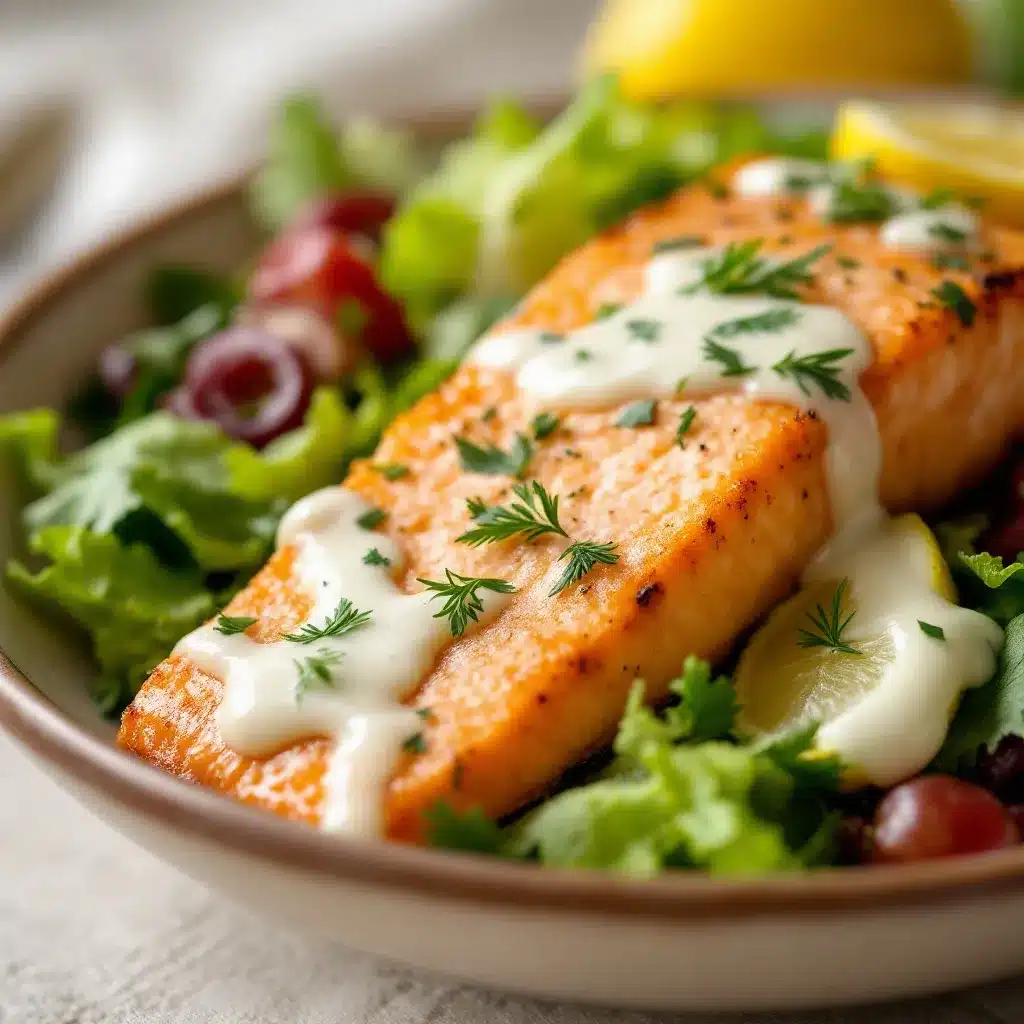
Let’s get into the nitty-gritty. This process is straightforward, but there are a few details that make the difference between good and great. First, preheat your oven to 400°F (200°C). This high heat is crucial for crisping the skin. While the oven heats up, take your salmon fillets out of the fridge. Let them sit for about 10-15 minutes to take the chill off. Cold fish hits the hot oven and can cook unevenly. Pat them dry with paper towels. This is the most important step. Moisture is the enemy of crispiness. If the skin is wet, it will steam instead of crisp. So, dry them thoroughly. Really dry them.
- Prepare the Salmon: In a small bowl, mix 2 tablespoons of mayonnaise, 1 teaspoon of garlic powder, 1 teaspoon of dried dill, and the zest of one lemon. Whisk this together until it forms a smooth paste. This will be your rub. (Time: 2 minutes)
- Season the Fish: Place the salmon fillets skin-side down on the prepared baking sheet. Spread the mayonnaise mixture evenly over the top of each fillet. Make sure to cover the entire surface. Season generously with salt and black pepper. The mayo will help the spices stick and create a crust. (Time: 3 minutes)
- Drizzle and Bake: Drizzle a little olive oil over the top of the salmon. This helps with browning. Place the baking sheet in the preheated oven. Bake for 12-15 minutes. The exact time depends on the thickness of your fillets. You want the salmon to be opaque and flake easily with a fork, but still moist. Do not overcook it. (Time: 15 minutes)
- Make the Sauce: While the salmon is baking, make the lemon dill sauce. In a small bowl, combine 1/2 cup of Greek yogurt, 1/4 cup of fresh chopped dill, 2 tablespoons of lemon juice, 1 teaspoon of honey, 1 clove of minced garlic, and a pinch of salt. Whisk until smooth. Taste and adjust seasoning. If it’s too tangy, add a bit more honey. If it’s too thick, add a splash of water or lemon juice. (Time: 5 minutes)
- Rest and Serve: Remove the salmon from the oven. Let it rest for 2-3 minutes. This allows the juices to redistribute. Plate the salmon skin-side down. Drizzle or spoon the lemon dill sauce over the top. Serve immediately with your choice of sides. (Time: 3 minutes)
Keep an eye on the salmon towards the end of the cooking time. If the top is browning too quickly, you can tent it loosely with foil. But usually, at 400°F, it should be fine. The goal is a golden-brown crust and tender, flaky flesh. If you’re unsure, use a thermometer. The internal temperature should reach 145°F (63°C), though many chefs prefer to pull it at 135°F (57°C) as it will continue to cook slightly on the plate.
Cooking Tips & Techniques
I learned the hard way that not drying the salmon is a fatal error. Once, I rushed this step, and the result was soggy skin. It was a disaster. So, take the time to pat it dry. Another tip: don’t overcrowd the pan. If you’re cooking for more than two people, use two baking sheets or cook in batches. Overcrowding leads to steaming, not baking. Also, the mayo rub is key. It might seem odd, but it creates a barrier that keeps the fish moist while allowing the spices to toast. Don’t skip it. For the sauce, taste as you go. Every lemon is different, so the amount of juice needed will vary. If you like it tangy, add more lemon. If you like it creamy, add more yogurt. There’s no right or wrong, just what you like. And finally, don’t overcook the fish. Salmon continues to cook after it’s removed from the oven due to residual heat. Pull it when it’s just barely opaque in the center. It will finish cooking on the plate. This ensures it stays moist and tender.
Variations & Adaptations
This recipe is a canvas for your creativity. If you’re not a fan of dill, try using fresh parsley or tarragon in the sauce. For a spicy kick, add a pinch of red pepper flakes to the mayo rub or a dash of hot sauce to the sauce. You can also swap the salmon for trout or cod, though the cooking time may vary slightly. For a gluten-free option, this recipe is naturally gluten-free, just ensure your mayo and yogurt are certified gluten-free. If you’re dairy-free, use coconut yogurt and olive oil instead of butter in other recipes, but here, the sauce is already dairy-free if you use coconut yogurt. I once tried adding capers to the sauce, and it was amazing. The briny flavor paired beautifully with the lemon. It’s a great twist if you like Mediterranean flavors. Another variation is to add a teaspoon of dijon mustard to the rub for extra tang. It’s a simple change that adds depth. Feel free to experiment and find your favorite combination.
Serving & Storage Suggestions
Serve this salmon warm, straight from the oven. It pairs beautifully with roasted vegetables, like asparagus or broccoli, or a simple green salad. I also love it with quinoa or rice to soak up the extra sauce. For a complete meal, add some crusty bread on the side. To store leftovers, let them cool completely and place them in an airtight container in the refrigerator for up to 2 days. The salmon can be reheated gently in the oven at 275°F (135°C) for about 10 minutes to avoid drying it out. Avoid the microwave, as it can make the fish rubbery. The sauce can be stored separately and refrigerated for up to 5 days. It actually tastes better after sitting for a while as the flavors meld. If you freeze the salmon, it’s best to do so before cooking, as cooked salmon doesn’t freeze well. Thaw it in the fridge overnight before preparing.
Nutritional Information & Benefits
This dish is not only delicious but also nutritious. Salmon is rich in omega-3 fatty acids, which are great for heart and brain health. It’s also a high-quality source of protein, which helps keep you full and satisfied. The lemon dill sauce adds probiotics from the yogurt, supporting gut health. The dish is naturally low-carb and gluten-free, making it suitable for various dietary preferences. One fillet with sauce contains approximately 300-350 calories, depending on the size of the fillet and the amount of sauce used. It’s a balanced meal that provides essential nutrients without excessive calories. I love that I can feel good about eating this, knowing it’s good for my body. It’s a perfect example of healthy eating that doesn’t taste like diet food.
Conclusion
This crispy baked salmon with lemon dill sauce is more than just a recipe; it’s a solution for busy weeknights. It’s quick, easy, and incredibly delicious. I hope you try it and see why it’s become a staple in my kitchen. Feel free to customize it to suit your taste, whether that means adding more spice or switching up the herbs. I’d love to hear how it turns out for you. Leave a comment below with your thoughts or share your variations. And if you make it, tag me on social media so I can see your creations. Thanks for reading, and happy cooking!
FAQs
Can I use frozen salmon for this recipe?
Yes, you can, but you must thaw it completely in the refrigerator overnight and pat it very dry. Excess moisture from freezing can prevent the skin from crisping properly.
How do I know when the salmon is done?
The salmon is done when it is opaque and flakes easily with a fork. The internal temperature should reach 145°F (63°C), though pulling it at 135°F (57°C) is often preferred for moistness.
Can I make the sauce ahead of time?
Absolutely. The lemon dill sauce can be made up to 3 days in advance. Store it in an airtight container in the refrigerator. Let it come to room temperature before serving for the best flavor.
What sides go well with this salmon?
Roasted asparagus, steamed broccoli, quinoa, or a simple arugula salad with lemon vinaigrette are all excellent pairings. It also goes great with crusty bread or rice.
Is the mayo in the rub noticeable?
No, not at all. The mayo bakes into the crust, adding richness and helping the spices adhere. It doesn’t taste like mayonnaise; it just adds a creamy, savory depth to the fish.
Pin This Recipe!
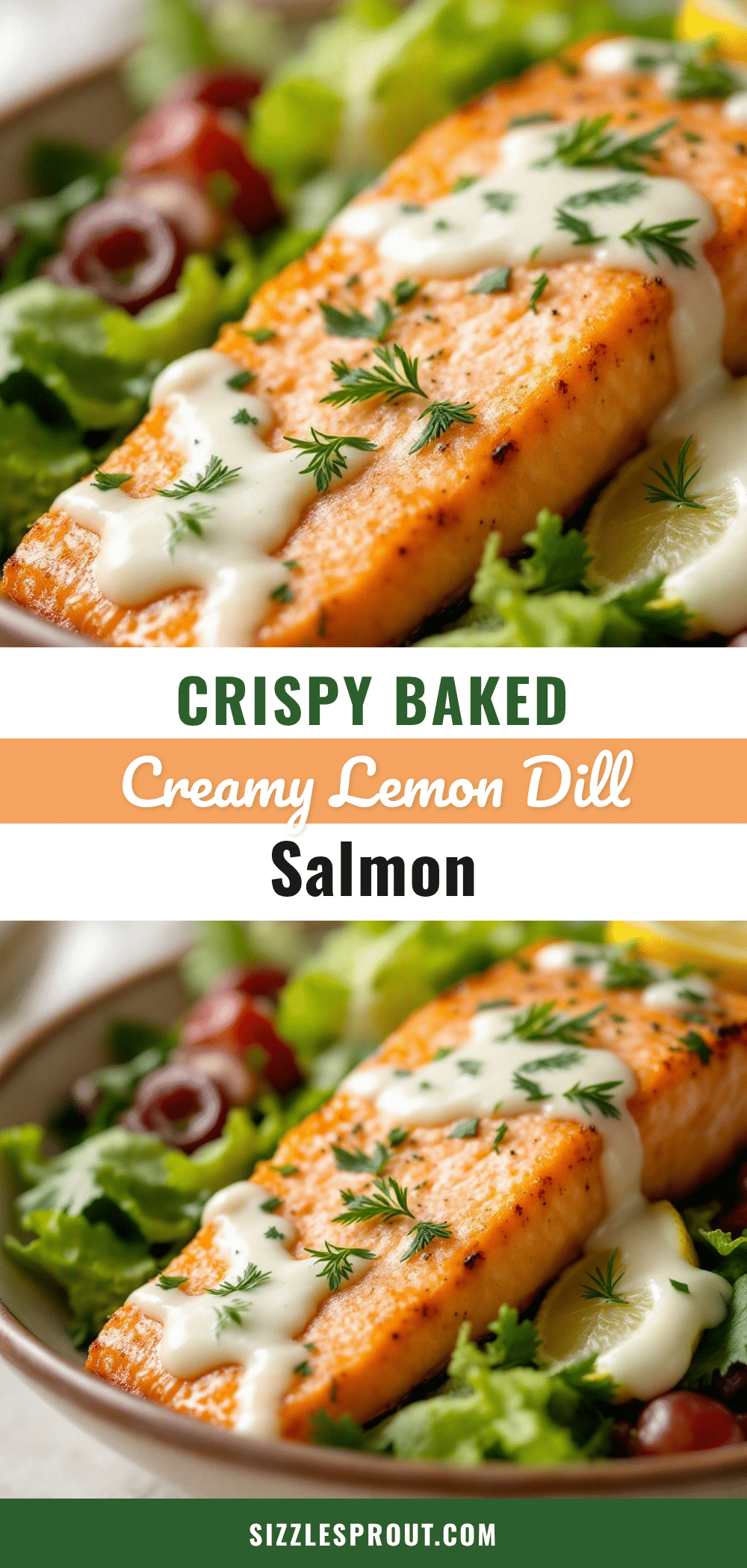
Crispy Baked Salmon with Lemon Dill Sauce
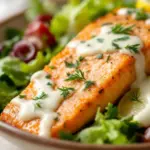
A quick and healthy weeknight dinner featuring skin-on salmon fillets baked to a shattering crisp, topped with a tangy, creamy lemon dill sauce. It’s a restaurant-quality meal ready in under 30 minutes.
- Prep Time: 10 minutes
- Cook Time: 15 minutes
- Total Time: 25 minutes
- Yield: 4 servings 1x
- Category: Main Course
- Cuisine: American
Ingredients
- 4 skin-on salmon fillets (6–8 oz each)
- 2 tablespoons mayonnaise
- 1 teaspoon garlic powder
- 1 teaspoon dried dill weed
- Zest of 1 lemon
- Salt and black pepper to taste
- Extra virgin olive oil
- 1/2 cup plain Greek yogurt
- 1/4 cup fresh dill, chopped
- 2 tablespoons lemon juice
- 1 teaspoon honey
- 1 clove garlic, minced
Instructions
- Preheat oven to 400°F (200°C). Line a rimmed baking sheet with parchment paper.
- Pat salmon fillets dry thoroughly with paper towels to ensure crispy skin.
- In a small bowl, whisk together mayonnaise, garlic powder, dried dill, and lemon zest to form a paste.
- Place salmon fillets skin-side down on the baking sheet. Spread the mayonnaise mixture evenly over the top of each fillet.
- Season generously with salt and black pepper, then drizzle lightly with olive oil.
- Bake for 12-15 minutes, or until the salmon is opaque and flakes easily with a fork.
- While salmon bakes, whisk together Greek yogurt, fresh dill, lemon juice, honey, minced garlic, and a pinch of salt to make the sauce.
- Remove salmon from oven and let rest for 2-3 minutes.
- Serve salmon immediately, drizzled or spooned with the lemon dill sauce.
Notes
Patting the salmon dry is crucial for crispy skin. Do not overcrowd the pan. The salmon continues to cook after removal from the oven, so pull it when it is just barely opaque in the center. Internal temperature should reach 145°F (63°C), though 135°F (57°C) is preferred for moistness.
Nutrition
- Serving Size: 1 fillet with sauce
- Calories: 325
- Sugar: 2
- Sodium: 350
- Fat: 22
- Saturated Fat: 4
- Carbohydrates: 4
- Fiber: 0.5
- Protein: 28
Keywords: salmon recipe, baked salmon, healthy dinner, lemon dill sauce, quick meals, weeknight dinner, gluten-free, high protein