Love this? Save it for later!
Share the inspiration with your friends
“I swear, the fridge was looking like a barren wasteland last Tuesday,” I confessed to my friend while juggling a toddler and a ringing phone. You know that feeling when you open the fridge door hoping for inspiration only to be greeted by a lonely jar of pickles, half a block of cheese, and a sad-looking carrot? Yeah, that night was one of those moments. Honestly, I considered ordering takeout, but then I remembered the little stash of pantry staples I keep tucked away for emergencies like this. What happened next? I whipped up a dinner that not only filled bellies but also brought a surprising comfort that made that half-empty fridge feel like a treasure trove.
Let me tell you, these easy family staples for empty fridge dinners aren’t just about getting food on the table—they’re about turning what feels like a kitchen crisis into a satisfying, even fun, cooking adventure. I’ve been there: the clock’s ticking, the kids are hungry, and your grocery run is still a day away. That’s when these recipes shine. They’re quick, forgiving, and use ingredients you likely already have—no last-minute store runs or complicated shopping lists needed.
Maybe you’ve been there too, staring into the abyss of an empty fridge at 6 PM, wondering how you’ll pull off dinner. These recipes became my go-to lifesavers, and honestly, after a few tweaks and a couple of happy accidents (like that time I forgot to drain the pasta water—oops!), they turned into family favorites. So, if you’re ready to rescue your evening with some simple, flavorful dishes, stick around. These five recipes will save your night, your sanity, and maybe even your reputation as the family chef.
Why You’ll Love This Recipe
These easy family staples for empty fridge dinners come from countless evenings where I had to get creative fast. They’re more than just recipes—they’re practical, tested solutions for busy households. Here’s why they’ve earned a permanent spot in my rotation:
- Quick & Easy: Each dish comes together in under 30 minutes, perfect for those hectic weeknights when time isn’t on your side.
- Simple Ingredients: No fancy or obscure ingredients here. Most are pantry staples or items you likely have in your fridge or freezer.
- Perfect for Any Occasion: Whether it’s a casual family dinner, last-minute guest drop-in, or a cozy meal after a long day, these recipes fit the bill.
- Crowd-Pleaser: From picky eaters to adults craving comfort food, these dishes consistently get thumbs up all around the table.
- Unbelievably Delicious: The combination of flavors and textures hits that sweet spot between simple and satisfying, turning humble ingredients into something memorable.
What makes these recipes stand out is the little tricks I’ve picked up along the way—like how a splash of vinegar can brighten a dull sauce or how to get maximum flavor from dried herbs when fresh isn’t available. These aren’t just ’empty fridge’ recipes; they’re lovingly crafted family staples that bring real comfort without fuss.
What Ingredients You Will Need
These recipes rely on simple, wholesome ingredients that play together to create satisfying meals without a ton of effort. Most are pantry or fridge staples, making them perfect for those “what do I have?” moments.
- For the base:
- Pasta (spaghetti, penne, or any shape you have on hand) – about 8 oz (225g)
- Rice (white or brown) – 1 cup (200g) uncooked
- Canned beans (black beans, chickpeas, or kidney beans) – 1 can (15 oz / 425 g)
- Eggs – 4 large (room temperature preferred)
- Vegetables & aromatics:
- Onion – 1 medium, diced
- Garlic – 2-3 cloves, minced
- Carrots – 1-2 medium, chopped or grated
- Frozen peas or mixed vegetables – 1 cup (150g)
- Tomato paste – 2 tablespoons (for depth and richness)
- Proteins & extras:
- Cheese (cheddar, mozzarella, or parmesan) – ½ cup (50g), shredded
- Cooked chicken, canned tuna, or tofu – optional, about 1 cup (150g)
- Olive oil or vegetable oil – 2-3 tablespoons
- Butter – 1 tablespoon (adds richness, optional)
- Seasonings & herbs:
- Salt and black pepper – to taste
- Dried oregano, basil, or Italian seasoning – 1 teaspoon
- Red pepper flakes – optional, a pinch for a little heat
- Soy sauce or Worcestershire sauce – 1 tablespoon (for umami kick)
I usually grab Barilla pasta for its consistent texture and Goya canned beans because they never disappoint. If you want a gluten-free option, you can swap regular pasta for chickpea or rice pasta, or use quinoa instead of rice. For dairy-free needs, try coconut or almond-based cheese alternatives. Honestly, these swaps keep the meals accessible and just as tasty.
Equipment Needed
- Large pot for boiling pasta or rice – a 4-quart (4-liter) pot works well.
- Medium skillet or frying pan – non-stick preferred for easy clean-up.
- Cutting board and sharp knife – essential for prepping veggies and proteins.
- Colander or sieve – for draining pasta and rinsing canned beans.
- Wooden spoon or spatula – for stirring and folding ingredients without scratching pans.
- Measuring cups and spoons – to keep things precise, especially for seasonings.
If you don’t have a non-stick pan, a well-seasoned cast iron skillet is a great alternative but watch the heat to avoid sticking. For budget-friendly options, a basic stainless steel pot and pan set will get the job done just fine. One tip from experience: keep a kitchen timer handy — it’s a small thing, but it saves you from overcooking pasta or burning garlic, especially when multitasking.
Preparation Method
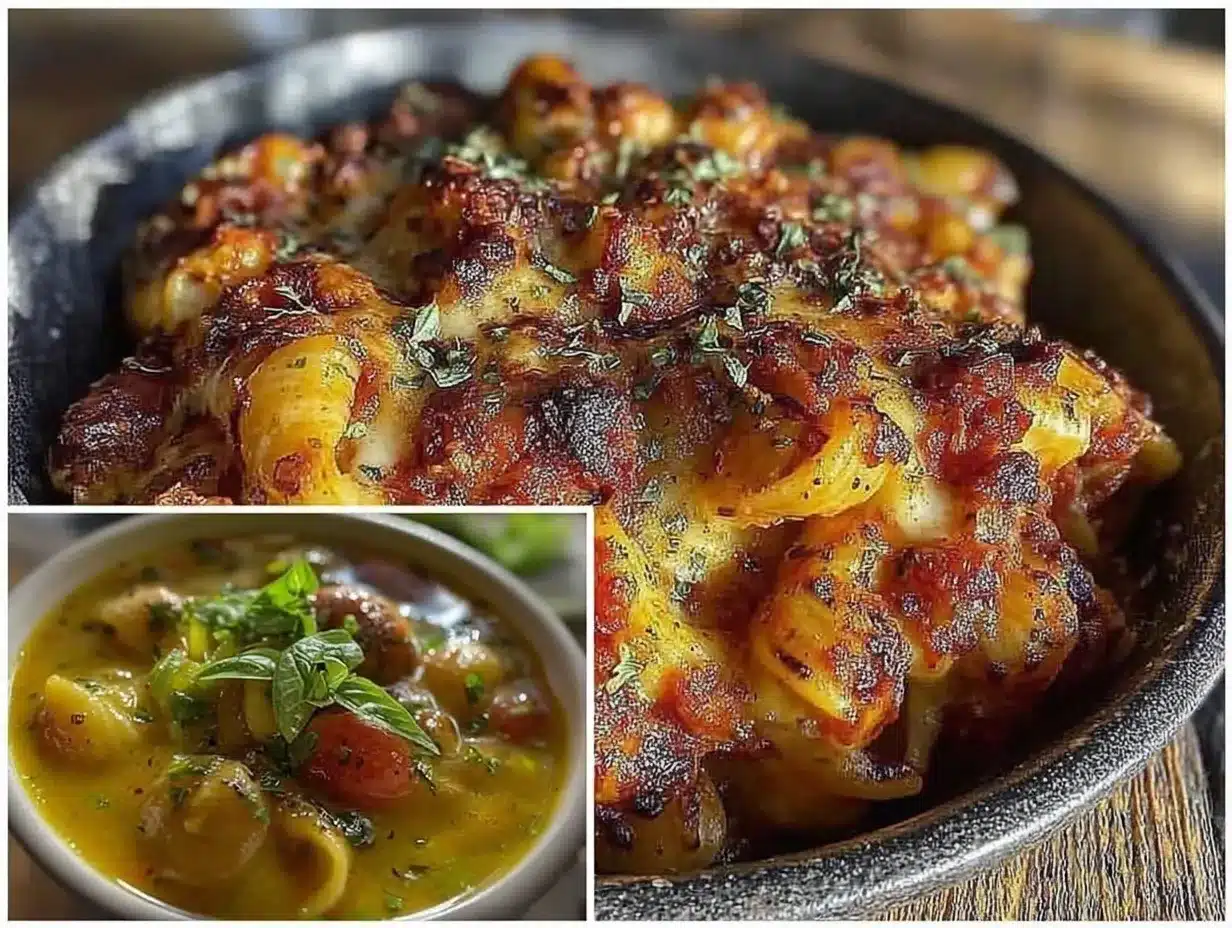
- Prep your ingredients (5-7 minutes): Dice the onion, mince the garlic, and chop or grate the carrots. If using frozen veggies, measure them out so they’re ready to go.
- Start boiling the pasta or rice (10-12 minutes): Bring a large pot of salted water to a boil. Add 8 oz (225g) of pasta or 1 cup (200g) of rice. Pasta usually takes 8-10 minutes; rice can take 15-20 minutes depending on type. Give it a stir occasionally to prevent sticking.
- Sauté aromatics (5 minutes): While the base cooks, heat 2 tablespoons of olive oil or butter in your skillet over medium heat. Add the diced onion and cook until translucent, about 3 minutes. Toss in the garlic and carrots, cooking for another 2 minutes until softened and fragrant.
- Add beans and seasonings (5 minutes): Drain and rinse 1 can (15 oz/425g) of beans. Add them to the skillet along with 2 tablespoons of tomato paste, 1 teaspoon dried herbs, salt, pepper, and a pinch of red pepper flakes if using. Stir everything together and cook for another 3-4 minutes, letting the flavors meld.
- Drain pasta or rice and combine (2 minutes): Once cooked, reserve a half cup (120ml) of the cooking water, then drain the rest. Add the pasta or rice to the skillet and toss everything together. If it looks dry, add a splash of the reserved cooking water to loosen it up.
- Finish with cheese and optional protein (3 minutes): Stir in ½ cup (50g) shredded cheese and any cooked protein you have on hand, like diced chicken or canned tuna. Let the cheese melt slightly, then taste and adjust seasoning.
- Serve warm and enjoy: Transfer to plates and garnish with fresh herbs if you have them. This meal is best enjoyed right away, though leftovers keep well.
Pro tip: When sautéing garlic, keep a close eye on it—it burns fast and turns bitter. Also, reserving pasta water is a little trick I learned from a chef friend; it makes the sauce cling to noodles beautifully. Don’t stress if your beans aren’t perfectly soft; the tomato paste and seasonings pull everything together.
Cooking Tips & Techniques
Honestly, making these easy family staples for empty fridge dinners work every time comes down to a few small details:
- Don’t overcook the pasta or rice: Al dente is your friend here. It holds up better when you toss it with the sauce and other ingredients, preventing mushy mix-ups.
- Use the reserved cooking water: That starchy liquid is like magic for loosening sauce and helping it stick to your pasta or rice.
- Season as you go: Layering salt and herbs throughout cooking builds flavor more effectively than dumping it all at the end.
- Mind the heat: Garlic and herbs can burn quickly. Medium or medium-low heat keeps them from turning bitter while coaxing out their aroma.
- Experiment with textures: Adding something crunchy, like toasted breadcrumbs or nuts, gives a nice contrast to softer beans and grains.
One lesson I learned the hard way was trying to rush the sautéing step. I ended up with raw-tasting onions in my dish. So, patience pays off! Also, multitasking helps: start boiling water first, then prep veggies while it heats. It cuts down active cooking time.
Variations & Adaptations
One of the best things about these recipes is their flexibility—you can switch things up depending on what you have or prefer.
- Vegetarian or Vegan: Skip the cheese or use a plant-based alternative. Add more beans or tofu for protein.
- Seasonal Veggies: Swap carrots and peas for whatever’s fresh or frozen—zucchini, bell peppers, spinach all work well.
- Spice it Up: Add a dash of hot sauce, smoked paprika, or fresh chili to give your meal a kick.
- Different Grains: Try quinoa, bulgur, or couscous instead of rice or pasta for variety and nutrition.
- Protein Boost: Stir in leftover rotisserie chicken, canned salmon, or scrambled eggs to bulk it up.
Personally, I once made a version with leftover roasted vegetables and a handful of kale tossed in at the end. It turned out so good I kept making it that way for a week straight.
Serving & Storage Suggestions
This easy dinner is best served warm, straight from the pan. I like to plate it with a sprinkle of fresh parsley or basil if I have some, adding a pop of color and freshness. A simple side salad or steamed greens complements it nicely, balancing the heartiness.
Leftovers keep well in an airtight container in the fridge for up to 3 days. Reheat gently in a skillet over medium-low heat, adding a splash of water or broth to bring back moisture. You can also microwave it, but watch the time to avoid drying out.
Flavors often deepen after a day, so sometimes leftovers taste even better than the first serving. Just remember to give it a good stir and check seasoning before serving again.
Nutritional Information & Benefits
This collection of easy family staples offers a balanced mix of carbohydrates, protein, and fiber. Beans provide plant-based protein and fiber, helping keep you full longer. Pasta or rice delivers energy-boosting carbs, while vegetables add important vitamins and minerals.
Most recipes are naturally low in added sugars and can be adapted to gluten-free or dairy-free diets with simple swaps. The use of olive oil contributes heart-healthy fats, and limiting heavy cream or butter keeps calories moderate.
From my experience, these meals not only satisfy hunger quickly but also offer nutritional benefits that support a busy family lifestyle without the fuss of complicated prep or obscure ingredients.
Conclusion
When the fridge looks like it’s seen better days and the clock’s ticking, these easy family staples for empty fridge dinners come to the rescue. They’re practical, fast, and comforting—just what you need to get dinner on the table without stress. I love how they turn simple ingredients into meals that feel homemade and hearty, no matter how hectic the day has been.
Feel free to make these recipes your own—swap ingredients, add your favorite herbs, or throw in whatever leftovers you’ve got. Trust me, your family (and your sanity) will thank you. If you try these, I’d love to hear how you made them your own—drop a comment or share your twist!
Here’s to many cozy dinners saved by pantry magic and a little creativity. You’ve got this!
FAQs about Easy Family Staples for Empty Fridge Dinners
What if I don’t have fresh vegetables on hand?
No worries! Frozen or canned vegetables work just as well. Just thaw or drain them before adding to the dish.
Can I make these recipes gluten-free?
Absolutely. Use gluten-free pasta or substitute rice, quinoa, or other gluten-free grains.
How do I store leftovers to keep them fresh?
Store meals in airtight containers in the fridge for up to 3 days. Reheat gently with a splash of water to keep them moist.
Can I prepare these recipes ahead of time?
Yes! You can prep veggies and cook grains in advance. Combine and finish cooking just before serving for best texture.
What’s a good protein substitute if I don’t eat meat?
Beans, tofu, tempeh, or even scrambled eggs are great protein options to add to these recipes.
For even more quick and comforting meal ideas, you might find inspiration in my crispy garlic chicken or the simple one-pot vegetable pasta recipes, both great for busy evenings when you need dinner fast.
Pin This Recipe!
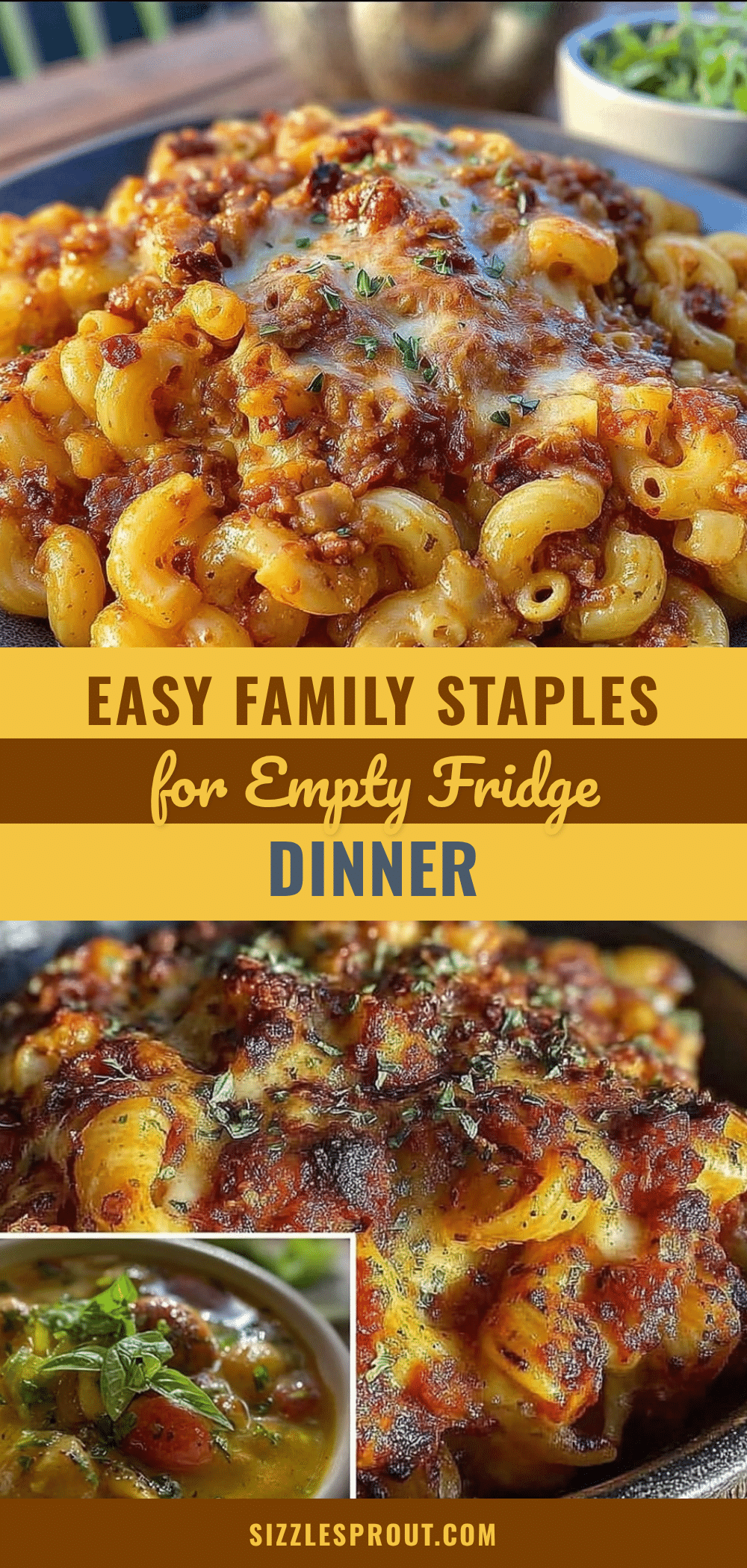
Easy Family Staples for Empty Fridge Dinner

Quick and comforting recipes using pantry staples and simple ingredients to create satisfying meals when your fridge is nearly empty.
- Prep Time: 10 minutes
- Cook Time: 20 minutes
- Total Time: 30 minutes
- Yield: 4 servings 1x
- Category: Main Course
- Cuisine: American
Ingredients
- 8 oz (225g) pasta (spaghetti, penne, or any shape)
- 1 cup (200g) uncooked rice (white or brown)
- 1 can (15 oz / 425g) canned beans (black beans, chickpeas, or kidney beans)
- 4 large eggs (room temperature preferred)
- 1 medium onion, diced
- 2–3 cloves garlic, minced
- 1–2 medium carrots, chopped or grated
- 1 cup (150g) frozen peas or mixed vegetables
- 2 tablespoons tomato paste
- ½ cup (50g) shredded cheese (cheddar, mozzarella, or parmesan)
- 1 cup (150g) cooked chicken, canned tuna, or tofu (optional)
- 2–3 tablespoons olive oil or vegetable oil
- 1 tablespoon butter (optional)
- Salt and black pepper to taste
- 1 teaspoon dried oregano, basil, or Italian seasoning
- Pinch of red pepper flakes (optional)
- 1 tablespoon soy sauce or Worcestershire sauce
Instructions
- Prep your ingredients (5-7 minutes): Dice the onion, mince the garlic, and chop or grate the carrots. Measure frozen veggies if using.
- Start boiling the pasta or rice (10-12 minutes): Bring a large pot of salted water to a boil. Add 8 oz pasta or 1 cup rice. Pasta cooks 8-10 minutes; rice 15-20 minutes depending on type. Stir occasionally.
- Sauté aromatics (5 minutes): Heat 2 tablespoons olive oil or butter in a skillet over medium heat. Cook diced onion until translucent (~3 minutes). Add garlic and carrots; cook 2 more minutes until softened.
- Add beans and seasonings (5 minutes): Drain and rinse beans. Add to skillet with tomato paste, dried herbs, salt, pepper, and red pepper flakes if using. Cook 3-4 minutes to meld flavors.
- Drain pasta or rice and combine (2 minutes): Reserve ½ cup cooking water, then drain. Add pasta or rice to skillet and toss. Add reserved water if mixture is dry.
- Finish with cheese and optional protein (3 minutes): Stir in shredded cheese and any cooked protein. Let cheese melt, then adjust seasoning.
- Serve warm and enjoy: Plate and garnish with fresh herbs if available. Best served immediately; leftovers keep well.
Notes
Keep a close eye on garlic to avoid burning. Reserve pasta water to loosen sauce and help it cling to noodles. Don’t overcook pasta or rice; al dente texture is best. Season as you go for better flavor layering. Use frozen or canned vegetables if fresh are unavailable. For gluten-free, swap pasta for chickpea or rice pasta or use quinoa. For dairy-free, use plant-based cheese alternatives.
Nutrition
- Serving Size: 1 plate (about 1/4 o
- Calories: 0.4
- Sugar: 5
- Sodium: 450
- Fat: 12
- Saturated Fat: 3
- Carbohydrates: 50
- Fiber: 7
- Protein: 18
Keywords: easy dinner, family staples, quick recipes, pantry meals, empty fridge dinner, simple ingredients, comfort food