Love this? Save it for later!
Share the inspiration with your friends
“I never thought my picky eater would touch anything green,” my friend Lisa confessed last Thursday as we swapped dinner stories over coffee. Honestly, I get it—finding healthy family dinners kids actually love feels like chasing a unicorn some nights. But here’s the thing: after months of trial, error, and a few accidental kitchen disasters (like that one time I mixed up salt and sugar—don’t ask), I found a way to make meals that not only nourish but also get those enthusiastic “more, please!” from even the tiniest critics at the table.
One evening, while juggling a teething toddler and a zoom call, I threw together a simple dish that was supposed to be a quick fix. To my surprise, it turned into a family favorite that even my notoriously stubborn nephew devoured without a fuss. Maybe you’ve been there, staring into the fridge, wondering what to whip up that’s both wholesome and kid-approved. That’s exactly why I’m sharing these recipes—because I want you to experience that same relief and joy.
These healthy family dinners are designed for busy parents who want to feed their families well without spending hours in the kitchen or wrestling with resistance. Let me tell you, these dishes not only pack in nutrition but come with flavors that kids will actually ask for again. No gimmicks, just honest, tasty food that makes dinnertime something everyone looks forward to.
Why You’ll Love This Recipe Collection
After countless kitchen experiments and feedback from families who’ve tried these dishes, I can confidently say these healthy family dinners kids actually love hit the right notes every time. Here’s why they’re a go-to for busy parents:
- Quick & Easy: Most recipes come together in under 30 minutes, perfect when you’re juggling homework, bath time, and bedtime stories.
- Simple Ingredients: No need for specialty shopping trips—these dishes use everyday pantry staples and fresh produce you can find anywhere.
- Perfect for Weeknight Dinners: Whether it’s a casual Monday or a rushed Friday, these meals fit right into your family’s routine.
- Crowd-Pleaser: Tried and tested with kids of all ages, these recipes consistently get thumbs up and requests for seconds.
- Unbelievably Delicious: The balance of flavors and textures keeps everyone engaged—think crispy edges, creamy sauces, and just the right hint of sweetness.
What sets this collection apart? I’ve carefully fine-tuned each recipe to blend nutrition with kid-friendly tastes. For example, in one dish, I sneak in pureed veggies to boost fiber without anyone noticing. Another features a clever swap of whole wheat pasta for classic noodles, adding extra nutrients but keeping that familiar comfort.
These meals aren’t just about filling plates—they’re about creating moments where your family can connect over food that feels both comforting and nourishing. You don’t have to sacrifice flavor for health here; that’s what makes these recipes stand out.
What Ingredients You Will Need
This collection uses straightforward, wholesome ingredients that come together to create flavorful, nutritious meals without fuss. Whether you’re stocking up for the week or grabbing last-minute items, you’ll likely have most of these on hand already.
- Proteins: Skinless chicken breasts or thighs (lean and versatile), ground turkey (great for meatballs or tacos), canned beans like black beans or chickpeas (fiber-rich and budget-friendly)
- Vegetables: Fresh carrots, bell peppers, spinach (mild flavor kids tolerate well), zucchinis (great grated into sauces), and sweet potatoes (naturally sweet and packed with vitamins)
- Grains & Starches: Whole wheat pasta (look for brands like Barilla for consistent texture), brown rice, quinoa (nutty flavor and protein boost), whole grain bread or wraps
- Dairy & Alternatives: Low-fat shredded cheese (sharp cheddar or mozzarella for melty goodness), plain Greek yogurt (can substitute sour cream or mayo), milk or dairy-free alternatives like oat or almond milk
- Pantry Staples: Olive oil (extra virgin preferred for flavor), garlic cloves (fresh or jarred minced), canned tomatoes (San Marzano if you can find them), herbs like basil, oregano, and parsley (fresh or dried), spices including paprika, cumin, and cinnamon (adds warmth and depth)
- Extras: Honey or maple syrup (for natural sweetness), nut butters (peanut or almond, unsweetened), lemon or lime juice (brightens flavors), low-sodium soy sauce or tamari (for an umami kick)
For gluten-free options, substitute pasta with rice noodles or gluten-free pasta varieties. Dairy-free? Swap cheese with nutritional yeast or vegan cheese, and use coconut or soy yogurt instead of Greek yogurt. I’ve tried these swaps myself, and they work well without sacrificing taste.
Equipment Needed
Most of these healthy family dinners can be made with basic kitchen tools you likely already own. Here’s what you’ll need:
- Large Skillet or Sauté Pan: Ideal for browning meat and cooking veggies quickly. I prefer a non-stick pan for easy cleanup, but cast iron works beautifully if you have it.
- Baking Sheet: For roasting vegetables or baking meatballs. A rimmed sheet helps keep juices contained.
- Medium Saucepan: For cooking grains like rice or quinoa.
- Mixing Bowls: A set of various sizes comes in handy for prepping ingredients and tossing salads.
- Measuring Cups & Spoons: Accurate measurements make a big difference, especially with spices and baking components.
- Blender or Food Processor (Optional): Great for pureeing sauces or making homemade dressings, but not essential.
If you don’t have a food processor, a sturdy whisk or fork can do the trick for mashing or blending. For budget-friendly options, many stores sell affordable non-stick pans and basic baking sheets that hold up well over time. Just remember to season any cast iron pans properly to keep them non-stick and rust-free.
Preparation Method
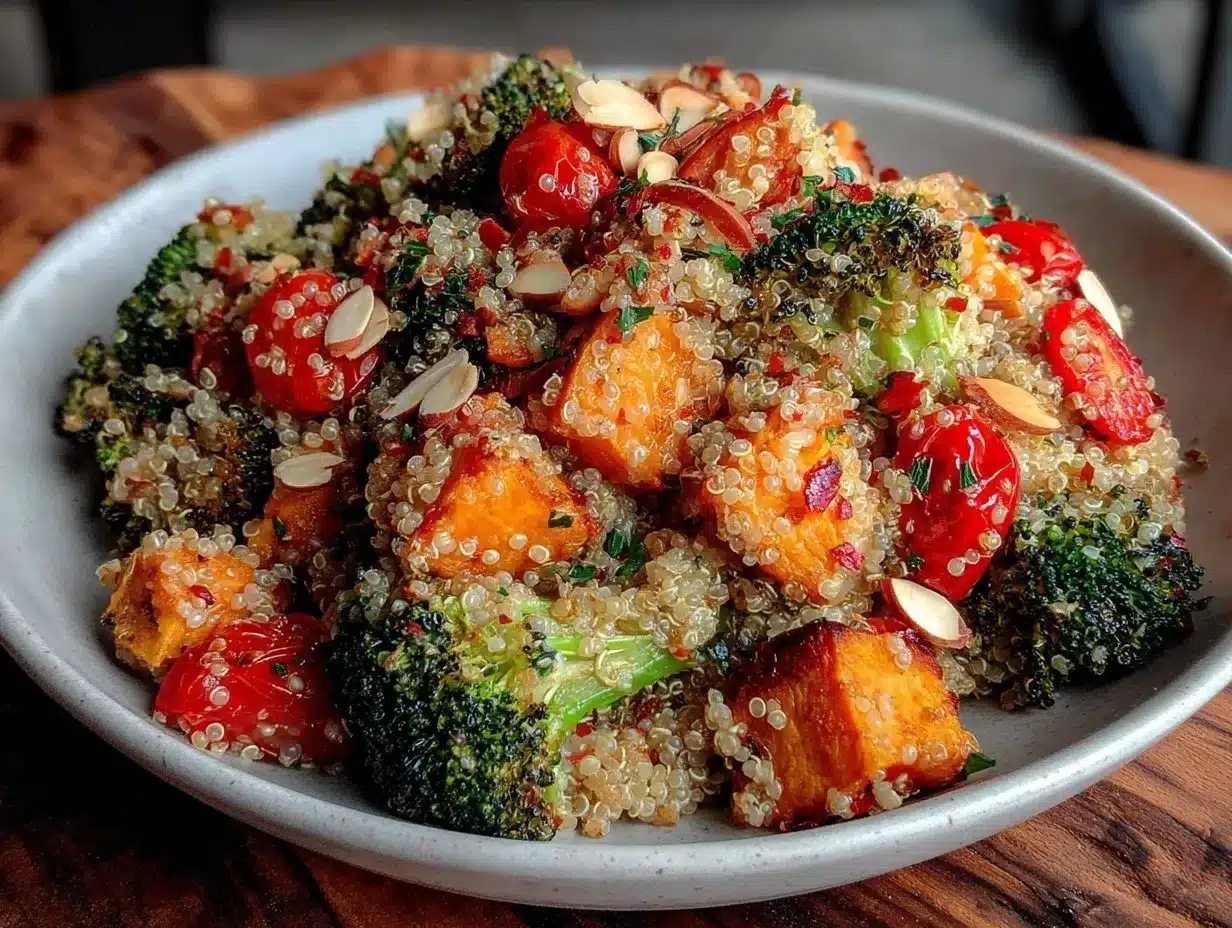
- Gather and Prep Ingredients (10-15 minutes): Wash and chop all vegetables into kid-friendly sizes—think bite-sized pieces or thin strips. For proteins like chicken, trim any excess fat and pat dry to ensure even cooking.
- Cook Grains (15-20 minutes): Rinse quinoa or rice under cold water to remove starch, then combine with water in a saucepan (use 1 cup grain to 2 cups water ratio). Bring to a boil, reduce to a simmer, cover, and cook until tender. Fluff with a fork and set aside.
- Prepare Proteins (10 minutes): Season chicken or turkey lightly with salt, pepper, and preferred spices. Heat olive oil over medium heat in your skillet. Add meat, cooking until golden brown and cooked through (internal temp 165°F/74°C). Remove and let rest, then dice or shred for easier eating.
- Sauté Vegetables (8-10 minutes): In the same pan, add a little more olive oil if needed. Toss in garlic and harder veggies like carrots and bell peppers first, stirring often. Add spinach or zucchini last since they cook quickly. Season lightly with herbs and a pinch of salt.
- Combine Ingredients (5 minutes): Return protein to the pan with vegetables. Stir in cooked grains or pasta, adding a splash of broth or water if it seems dry. Taste and adjust seasoning—sometimes a squeeze of lemon brightens the whole dish.
- Optional Finishing Touches (2-3 minutes): Top with shredded cheese and cover briefly to melt, or drizzle with a simple dressing made from Greek yogurt, lemon juice, and herbs for extra creaminess.
Keep an eye on textures—vegetables should be tender but not mushy, and proteins juicy without dryness. If you’re mixing meatballs or patties, don’t overwork the mixture or it can get tough. And a quick tip: prepping ingredients the night before can save precious time on busy evenings.
Cooking Tips & Techniques
Here are some tips I’ve picked up that make these healthy family dinners come together like a charm:
- Layer Flavors: Start with aromatics like garlic and onions to build a tasty base. Adding herbs at the end preserves their freshness.
- Don’t Overcook Veggies: Kids notice when vegetables turn mushy or bland. Aim for vibrant colors and slight crunch to keep them appealing.
- Use Mild Spices: Paprika, cumin, and cinnamon add warmth without heat, perfect for sensitive palates.
- Make It Fun: Try cutting food into fun shapes or serving meals in colorful bowls to pique kids’ interest.
- Batch Cook and Freeze: Many dishes freeze well. Portion leftovers into airtight containers to have ready-made dinners on hand.
One time, I forgot to thaw chicken overnight and had to improvise with canned beans in a pinch—it turned out surprisingly tasty and even inspired a new recipe! So don’t stress if things don’t go perfectly; sometimes those are the best meals.
Variations & Adaptations
These recipes are flexible enough to suit different tastes and dietary needs. Here are some ideas you might like:
- Vegetarian Version: Swap chicken or turkey with firm tofu, tempeh, or extra beans for protein. You can marinate tofu in soy sauce and ginger to add flavor.
- Seasonal Twists: Use butternut squash or pumpkin in autumn instead of sweet potatoes. Summer calls for fresh tomatoes and zucchini from the garden.
- Spice Level Adjustments: For older kids or adults, add a pinch of chili flakes or a dash of hot sauce on the side. For younger children, keep spices mild and offer dips like yogurt to cool things down.
- Gluten-Free Options: Replace whole wheat pasta with gluten-free pasta or spiralized vegetables. Double-check all sauces and seasonings to avoid hidden gluten.
Personally, I once swapped out spinach for kale in a recipe, and while the flavor was a bit earthier, the kids didn’t seem to mind at all once it was well-seasoned. Feel free to experiment and find what clicks for your family!
Serving & Storage Suggestions
Serve these meals warm, straight from the pan or oven, for the best taste and texture. Presentation can make a difference—try garnishing with fresh herbs or a sprinkle of cheese to make the plate more inviting.
Pair these dinners with simple sides like a crisp green salad, steamed veggies, or fresh fruit to round out the meal. Drinks like infused water or a mild iced tea work well to keep things light.
For leftovers, store in airtight containers in the refrigerator for up to 3 days. Many dishes also freeze beautifully—portion them into freezer-safe containers and thaw overnight in the fridge before reheating gently on the stove or in the microwave.
Reheating tips: warm slowly and stir occasionally to keep textures intact. Flavors often deepen after a day or two in the fridge, so sometimes leftovers taste even better than the first round!
Nutritional Information & Benefits
These healthy family dinners offer a balanced mix of protein, fiber, and essential vitamins. Here’s a rough estimate per serving:
| Calories | Protein | Fiber | Fat | Carbohydrates |
|---|---|---|---|---|
| 350-450 kcal | 25-30 g | 5-8 g | 8-12 g | 40-50 g |
Key ingredients like sweet potatoes and spinach provide antioxidants and vitamins A and C, important for growing bodies. Lean proteins support muscle development, and whole grains deliver sustained energy.
These recipes are naturally gluten-free when using appropriate substitutions and can be adapted for dairy-free diets as well. Just watch for allergens like nuts in sauces or dressings and swap accordingly.
From a wellness standpoint, feeding kids meals that combine good taste with nutrition sets healthy habits early on—something I always keep in mind when cooking for my own family.
Conclusion
These healthy family dinners kids actually love prove you don’t have to sacrifice flavor or ease for nutrition. They’re quick to make, use simple ingredients, and most importantly, bring your family together around the table with smiles and satisfied appetites.
Feel free to tweak these recipes based on what your crew enjoys—after all, cooking for family is as much about adapting as it is about following instructions. I love these meals because they remind me that even on the busiest nights, good food can be comforting and fun.
Give them a try, and I’d love to hear your stories or any creative spins you add! Drop a comment below or share this with other parents juggling the dinnertime hustle. Here’s to making mealtime easier and tastier for everyone!
FAQs
What are some tips for getting picky kids to try new healthy foods?
Try involving kids in cooking, offering familiar flavors alongside new ones, and presenting food in fun shapes or colorful plates. Repeated exposure without pressure often helps too.
Can these recipes be prepared ahead of time?
Absolutely! Most dishes can be prepped partially or fully in advance and stored in the fridge or freezer, making busy weeknights much smoother.
How can I make these dinners more allergy-friendly?
Identify allergens first, then substitute ingredients accordingly—like using gluten-free grains, dairy-free yogurts, or nut-free butters. Always read labels carefully.
Are these meals suitable for toddlers?
Many recipes can be adapted for toddlers by cutting food into smaller pieces, avoiding added salt, and reducing spices. Always supervise young children while eating.
What’s a good side dish to serve with these healthy family dinners?
Simple sides like steamed vegetables, fresh fruit, or a light salad complement these meals well without overwhelming young palates.
Pin This Recipe!
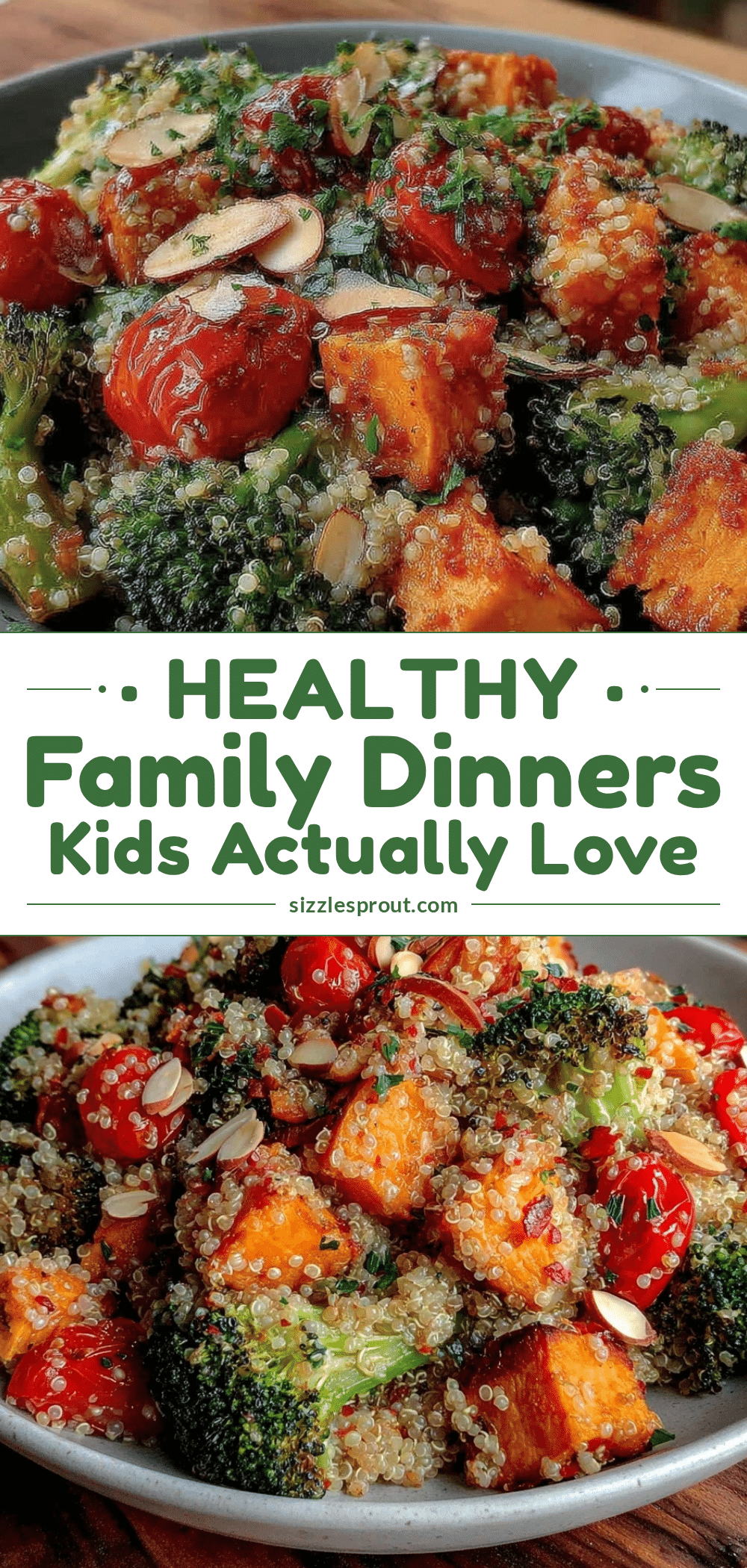
Healthy Family Dinners Kids Actually Love: 10 Easy Recipes for Busy Parents

A collection of quick, easy, and nutritious family dinner recipes designed to please even picky eaters. These meals use simple ingredients and come together in under 30 minutes, perfect for busy parents.
- Prep Time: 10-15 minutes
- Cook Time: 25-30 minutes
- Total Time: 35-45 minutes
- Yield: 4 servings
- Category: Main Course
- Cuisine: American
Ingredients
- Skinless chicken breasts or thighs
- Ground turkey
- Canned beans (black beans or chickpeas)
- Fresh carrots
- Bell peppers
- Spinach
- Zucchinis
- Sweet potatoes
- Whole wheat pasta
- Brown rice
- Quinoa
- Whole grain bread or wraps
- Low-fat shredded cheese (cheddar or mozzarella)
- Plain Greek yogurt
- Milk or dairy-free alternatives (oat or almond milk)
- Olive oil (extra virgin)
- Garlic cloves (fresh or jarred minced)
- Canned tomatoes (San Marzano if available)
- Herbs (basil, oregano, parsley – fresh or dried)
- Spices (paprika, cumin, cinnamon)
- Honey or maple syrup
- Nut butters (peanut or almond, unsweetened)
- Lemon or lime juice
- Low-sodium soy sauce or tamari
Instructions
- Gather and prep ingredients: wash and chop vegetables into bite-sized pieces; trim and pat dry proteins.
- Cook grains: rinse quinoa or rice, combine with water (1 cup grain to 2 cups water), bring to boil, simmer covered until tender, then fluff with a fork.
- Prepare proteins: season chicken or turkey with salt, pepper, and spices; heat olive oil in skillet over medium heat; cook meat until golden and internal temp reaches 165°F (74°C); remove and let rest, then dice or shred.
- Sauté vegetables: add olive oil if needed; cook garlic and harder vegetables first (carrots, bell peppers), then add spinach or zucchini; season with herbs and salt.
- Combine ingredients: return protein to pan with vegetables; stir in cooked grains or pasta; add broth or water if dry; adjust seasoning and add lemon juice if desired.
- Optional finishing touches: top with shredded cheese and cover briefly to melt, or drizzle with a dressing made from Greek yogurt, lemon juice, and herbs.
Notes
Prep ingredients the night before to save time. Avoid overcooking vegetables to keep them vibrant and appealing. Use mild spices like paprika, cumin, and cinnamon for kid-friendly flavor. Meals freeze well; store leftovers in airtight containers for up to 3 days refrigerated or freeze for longer storage. Reheat gently to maintain texture and flavor.
Nutrition
- Serving Size: 1 serving (approxima
- Calories: 350450
- Sugar: 58
- Sodium: 300500
- Fat: 812
- Saturated Fat: 23
- Carbohydrates: 4050
- Fiber: 58
- Protein: 2530
Keywords: healthy family dinners, kid-friendly meals, quick dinners, easy recipes, nutritious meals, picky eater recipes, busy parents, wholesome ingredients