Love this? Save it for later!
Share the inspiration with your friends
Introduction
“I never thought duck breast would become my go-to dinner until that summer evening last July,” I told my friend while we savored the last bites of this perfectly pan-seared duck breast with fresh peach thyme gastrique. Honestly, it all began with a spontaneous trip to the farmers’ market—where a vendor handed me a tiny, wrinkled peach as a sample and casually mentioned how peaches and thyme make the best combo for a quick sauce. I was skeptical at first.
The power flickered in my kitchen that night (classic Tuesday), so I had to improvise with just what was on hand. I grabbed the duck breasts from the fridge, the peaches from the bag, and a sprig of thyme from my window garden. I wasn’t even sure if the gastrique would turn out right; I forgot the sugar initially and almost gave up. But when the duck skin crisped to golden perfection and the sauce balanced sweet and herbal notes with a zing, I was hooked.
Maybe you’ve been there — craving something impressive but wanting it simple enough to whip up after a long day. This duck breast recipe isn’t about complicated steps or hard-to-find ingredients. It’s about that perfect harmony of textures and flavors that makes you pause and appreciate every bite. It’s why I keep making it, especially when I want to impress without stress. Let me tell you, once you try this, pan-seared duck will never feel intimidating again.
Why You’ll Love This Recipe
This recipe for perfect pan-seared duck breast with fresh peach thyme gastrique has become a favorite for so many reasons. After testing multiple versions, tweaking small details, and hearing my family rave, I can confidently say it’s a winner for both beginners and seasoned cooks. Here’s why you’ll want to make it ASAP:
- Quick & Easy: The whole dish comes together in under 30 minutes, perfect for busy weeknights or spontaneous dinner parties.
- Simple Ingredients: No exotic groceries needed. You likely have the basics in your pantry and just need to pick up fresh peaches and thyme.
- Perfect for Special Occasions: Whether it’s date night, a holiday meal, or an impressive weekend treat, this dish delivers every time.
- Crowd-Pleaser: The crispy skin and juicy duck paired with a subtly sweet gastrique always earns compliments, even from those who don’t usually go for duck.
- Unbelievably Delicious: The peach thyme gastrique brings a fresh, slightly tangy sweetness that cuts through the richness of the duck, creating a balanced flavor profile that’s pure magic.
What sets this recipe apart is the focus on technique—rendering the fat slowly to crisp the skin perfectly while keeping the meat tender and pink. Plus, the gastrique is straightforward but nuanced, relying on fresh fruit and herbs rather than heavy sauces. Honestly, it’s the kind of dish that makes you close your eyes after the first bite and smile, savoring the harmony of flavors. If you want a restaurant-worthy meal that’s approachable and memorable, this duck breast recipe is your answer.
What Ingredients You Will Need
This perfect pan-seared duck breast recipe uses simple, wholesome ingredients that bring out bold flavor and satisfying textures without fuss. Most are pantry staples, with fresh peaches and thyme adding that seasonal flair. Here’s what you’ll gather:
- Duck Breasts: 2 boneless duck breasts, skin on, about 6-7 oz (170-200 g) each – look for fresh, good-quality meat from a trusted butcher.
- Fresh Peaches: 2 ripe peaches, peeled and diced (or substitute with nectarines in summer)
- Fresh Thyme: 3-4 sprigs, plus extra for garnish
- Shallots: 1 small shallot, finely minced (adds mild sweetness)
- White Wine Vinegar: 2 tablespoons (helps create the gastrique’s tang)
- Granulated Sugar: 2 tablespoons (balances the acidity with sweetness)
- Chicken or Vegetable Stock: 1/4 cup (60 ml) to add depth to the sauce
- Salt & Freshly Ground Black Pepper: to taste
- Olive Oil: 1 tablespoon (for searing)
- Unsalted Butter: 1 tablespoon (for finishing the sauce and duck)
Ingredient tips: I recommend using Crescent Ridge duck breasts for great texture. If peaches aren’t in season, frozen sliced peaches work fine—just thaw and drain excess liquid. For the vinegar, a mild white wine vinegar works best, but apple cider vinegar is a decent swap. Want a dairy-free option? Skip the butter and finish the sauce with a drizzle of good-quality olive oil.
Equipment Needed
- Heavy Skillet or Cast Iron Pan: Essential for even heat and crisping the duck skin beautifully. I’ve tried non-stick pans but they don’t develop that same crust.
- Sharp Chef’s Knife: For scoring the duck skin and dicing peaches and shallots precisely.
- Small Saucepan: For simmering the peach thyme gastrique sauce without burning the sugar.
- Tongs: To flip the duck breasts easily without piercing the meat.
- Instant-Read Thermometer (optional but recommended): To check the internal temperature of the duck for perfect doneness.
If you don’t have a cast iron, a heavy stainless steel skillet works well, just be sure to preheat it properly. For tongs, wooden or silicone-tipped ones protect your pans better. I always keep a trusty thermometer on hand—it’s saved me from overcooking duck more times than I can count!
Preparation Method
- Score and Season the Duck: Using a sharp knife, carefully score the skin of each duck breast in a crisscross pattern without cutting into the meat. This helps release the fat and crisps the skin. Season both sides generously with salt and freshly ground black pepper. Let sit for 10-15 minutes at room temperature while you prep the sauce.
- Prepare the Peach Thyme Gastrique Base: In a small saucepan, combine the white wine vinegar and granulated sugar. Heat over medium heat, stirring occasionally until the sugar dissolves. Let the mixture simmer gently until reduced by half, about 5-7 minutes. Keep an eye so it doesn’t burn.
- Add Peaches and Shallots: Stir in the diced peaches, minced shallot, and fresh thyme sprigs. Pour in the chicken or vegetable stock and simmer for another 8-10 minutes, stirring occasionally. The peaches should soften and the sauce will thicken slightly. Remove thyme sprigs before serving.
- Sear the Duck Breasts: Heat a heavy skillet or cast iron pan over medium heat. Add olive oil and place the duck breasts skin-side down. Cook slowly for 6-8 minutes, rendering out the fat and crisping the skin to a golden brown. Don’t rush this step; patience is key here.
- Flip and Finish Cooking: Turn the duck breasts over and cook for an additional 4-5 minutes for medium-rare (internal temperature about 135°F / 57°C). Adjust timing slightly if you prefer medium.
- Rest the Duck: Remove the breasts from the pan and let rest on a cutting board for 5 minutes. This helps the juices redistribute and keeps the meat tender.
- Finish the Sauce: While the duck rests, stir the unsalted butter into the peach thyme gastrique for a glossy finish. Taste and adjust seasoning with salt and pepper as needed.
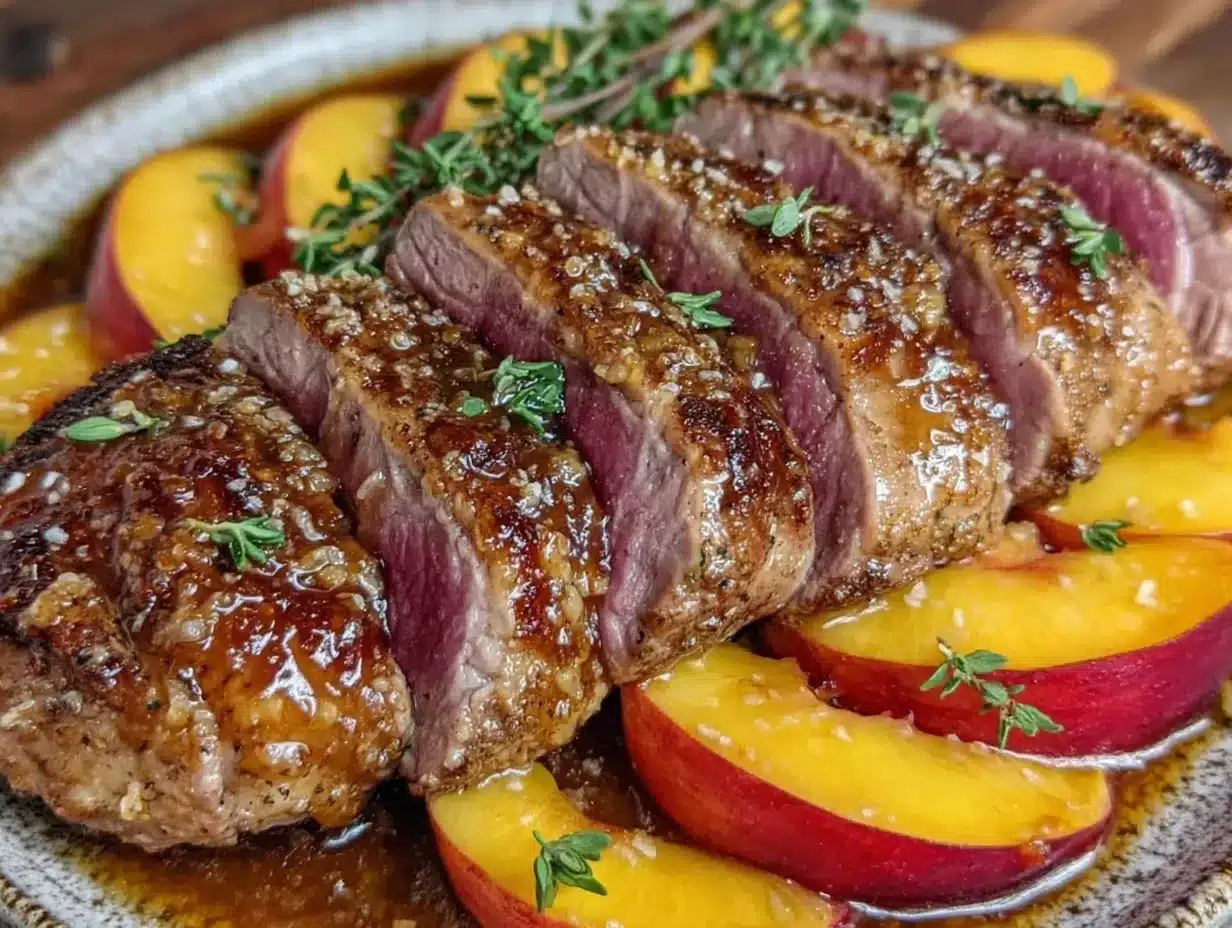
- Slice and Serve: Slice the duck breasts thinly against the grain. Plate with a generous drizzle of the peach thyme gastrique and garnish with fresh thyme sprigs.
Tip: If your duck skin isn’t crisping well, it might be because the pan is too hot or the duck was too cold. Lower the heat and be patient—you want fat to render slowly. Also, don’t crowd the pan, or you’ll steam instead of sear.
Cooking Tips & Techniques
Cooking duck breast perfectly can feel daunting, but a few techniques make a world of difference. First off, scoring the skin is non-negotiable. It not only allows fat to escape but creates that irresistible crackling texture. I used to skip this step and ended up with chewy skin—lesson learned the hard way.
Rendering the fat slowly over medium heat is key. If your pan’s too hot, the skin burns before the fat melts. If too cool, it won’t crisp. I usually start on medium and adjust slightly after a couple of minutes. Also, don’t prick the meat with a fork; you want to keep those juices locked in.
Resting the duck after cooking is another crucial step. I’ve found that slicing too soon leads to dry meat. Five minutes on the cutting board, loosely tented with foil, works perfectly every time. For the peach thyme gastrique, keep an eye on the vinegar reduction stage—too much heat and it turns bitter.
Finally, multitasking helps—start the gastrique while the duck rests so your timing is tight and everything comes together hot and fresh. This recipe definitely rewards patience and attention to detail.
Variations & Adaptations
Want to switch things up or accommodate dietary needs? Here are a few variations I’ve tried and loved:
- Gluten-Free Option: Use gluten-free vinegar and stock to keep the sauce safe for gluten sensitivities.
- Seasonal Fruits: Swap peaches for plums or apricots in spring or fall, adjusting cooking times slightly for softer or firmer fruit.
- Herb Variations: Replace thyme with rosemary or tarragon for a different herbal note that pairs beautifully with duck.
- Cooking Method: If you prefer, finish the duck in a 400°F (200°C) oven for 5 minutes after searing for more even cooking.
- My Personal Twist: I sometimes add a splash of brandy to the gastrique for a subtle warming kick that adds complexity.
Serving & Storage Suggestions
This pan-seared duck breast with peach thyme gastrique is best served warm, right after plating. The crispy skin contrasts beautifully with the tender meat and glossy sauce. For sides, creamy mashed potatoes or a simple arugula salad with shaved Parmesan complement the richness perfectly.
Leftovers keep well in an airtight container in the refrigerator for up to 2 days. Reheat gently in a skillet over low heat to maintain skin crispness. The gastrique thickens when chilled—simply stir in a splash of warm water or stock to loosen before serving again.
Interestingly, the flavors mellow and meld after a day, making the dish taste even more harmonious. If freezing, wrap the duck tightly and freeze the gastrique separately. Thaw overnight in the fridge before reheating.
Nutritional Information & Benefits
A serving of this dish (one duck breast with sauce) contains approximately 450 calories, 35g protein, 30g fat, and 8g carbohydrates. Duck breast is a fantastic source of iron, zinc, and B vitamins, supporting energy and immune health.
The peach thyme gastrique adds antioxidants and vitamin C from the fresh fruit, with minimal added sugar. This recipe is naturally gluten-free and can be adapted for dairy-free diets by omitting butter.
From a wellness perspective, it’s a satisfying protein-rich meal that balances indulgence with fresh, wholesome ingredients. I appreciate how it feels special but not heavy or overly processed.
Conclusion
If you’re looking for a recipe that turns humble duck breast into a stunning, restaurant-quality dish, this perfect pan-seared duck breast with fresh peach thyme gastrique is your answer. It’s approachable, flavorful, and just a little bit fancy without fuss.
Feel free to customize the sauce or herbs to suit your taste—you might discover your own signature twist like I did with a splash of brandy. Honestly, this recipe has become my secret weapon for impressing guests and treating myself to something special after a long day.
Give it a try, and please share how it goes! I love hearing your adaptations and stories around this dish. Cooking is about joy, experimentation, and savoring the moment—this recipe delivers that in every bite.
FAQs about Perfect Pan-Seared Duck Breast with Peach Thyme Gastrique
How do I know when the duck breast is cooked perfectly?
Use an instant-read thermometer; 135°F (57°C) is medium-rare and ideal for tender, juicy duck. The skin should be crisp and golden, and the meat slightly pink inside.
Can I use frozen duck breasts for this recipe?
Yes, but thaw them fully in the refrigerator overnight before cooking. Pat the skin dry thoroughly to ensure crisping.
What can I substitute if I don’t have fresh peaches?
Frozen peaches work well after thawing and draining excess liquid. You could also try nectarines or apricots depending on the season.
Is it necessary to score the duck skin?
Yes, scoring helps render the fat and makes the skin crispy. Just be careful not to cut into the meat itself.
Can I make the peach thyme gastrique ahead of time?
Absolutely! It keeps well refrigerated for up to 3 days. Reheat gently before serving and stir to loosen if thickened.
For those interested in other savory pan-seared dishes, I remember the time I perfected a crispy garlic chicken recipe that’s just as satisfying with a different protein. Also, if you love fruit-infused sauces, the spiced apple cider glaze pairs wonderfully with pork and might inspire your next culinary experiment!
Pin This Recipe!

Perfect Pan-Seared Duck Breast Recipe with Easy Peach Thyme Gastrique

A simple yet impressive pan-seared duck breast recipe paired with a fresh peach thyme gastrique that balances sweet and herbal flavors. Perfect for special occasions or a quick, elegant dinner.
- Prep Time: 15 minutes
- Cook Time: 15 minutes
- Total Time: 30 minutes
- Yield: 2 servings 1x
- Category: Main Course
- Cuisine: American
Ingredients
- 2 boneless duck breasts, skin on, about 6-7 oz (170–200 g) each
- 2 ripe peaches, peeled and diced (or substitute with nectarines)
- 3–4 sprigs fresh thyme, plus extra for garnish
- 1 small shallot, finely minced
- 2 tablespoons white wine vinegar
- 2 tablespoons granulated sugar
- 1/4 cup (60 ml) chicken or vegetable stock
- Salt and freshly ground black pepper, to taste
- 1 tablespoon olive oil
- 1 tablespoon unsalted butter
Instructions
- Score the skin of each duck breast in a crisscross pattern without cutting into the meat. Season both sides generously with salt and freshly ground black pepper. Let sit for 10-15 minutes at room temperature.
- In a small saucepan, combine white wine vinegar and granulated sugar. Heat over medium heat, stirring occasionally until sugar dissolves. Simmer until reduced by half, about 5-7 minutes.
- Stir in diced peaches, minced shallot, and fresh thyme sprigs. Pour in chicken or vegetable stock and simmer for 8-10 minutes, stirring occasionally. Remove thyme sprigs before serving.
- Heat a heavy skillet or cast iron pan over medium heat. Add olive oil and place duck breasts skin-side down. Cook slowly for 6-8 minutes until skin is golden and fat is rendered.
- Flip duck breasts and cook for an additional 4-5 minutes for medium-rare (internal temperature about 135°F / 57°C). Adjust time for preferred doneness.
- Remove duck breasts from pan and let rest on a cutting board for 5 minutes.
- Stir unsalted butter into the peach thyme gastrique for a glossy finish. Adjust seasoning with salt and pepper as needed.
- Slice duck breasts thinly against the grain. Plate with a generous drizzle of the peach thyme gastrique and garnish with fresh thyme sprigs.
Notes
Score the duck skin to render fat and achieve crispy skin. Render fat slowly over medium heat to avoid burning. Rest duck for 5 minutes before slicing to keep meat tender. If peach thyme gastrique thickens when chilled, stir in warm water or stock to loosen. For dairy-free, omit butter and finish sauce with olive oil.
Nutrition
- Serving Size: 1 duck breast with s
- Calories: 450
- Sugar: 6
- Sodium: 350
- Fat: 30
- Saturated Fat: 8
- Carbohydrates: 8
- Fiber: 1
- Protein: 35
Keywords: duck breast, pan-seared duck, peach thyme gastrique, easy duck recipe, quick dinner, special occasion, poultry, fruit sauce